A minimalist smart home succeeds or fails on four measurable questions: how much space a device occupies, whether it matches your home's aesthetic, whether it genuinely simplifies a task, and whether it demands its own app or folds into a central system. Technology writers and user-experience researchers converge on the same core idea — smart technology should be experienced, not seen — and the most common smart home complaints are clutter of one kind or another: too many apps, too many visible hubs, too many gadgets that never earned their place. This article turns that consensus into a reusable evaluation framework you can apply to any device before you buy it.
The Philosophy of Minimalist Smart Homes
The core philosophy of minimalist smart home technology, as Brandon Doyle frames it in reporting for the National Association of Realtors, is that "technology should be experienced, not seen — adding significant functionality without obscuring the aesthetic." The shift is not purely cosmetic. It is about integrating technology seamlessly into the home environment so the experience is enhanced rather than interrupted.
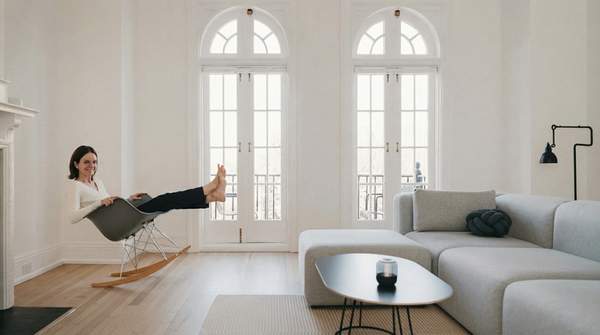
Interior design commentary pushes the same point further. Writing on smart home aesthetics, design bloggers argue that the modern smart home is no longer "a space filled with tangled cables, bulky devices, or plastic components disrupting the atmosphere," and that technology "must be invisible; it should exist without breaking the aesthetic harmony — ideally, enhancing it." Minimalist design in this view strips away excess, letting clean lines, neutral palettes, and negative space become the backdrop for intelligent systems — an approach its advocates say reduces visual noise and supports mental clarity.
The stakes are real, because the failure mode is well documented. A nine-month field trial of ten UK households, cited in research on user requirements for smart home design, found smart homes to be "technically and socially disruptive," with households shouldering significant cognitive, practical, and symbolic work to integrate the technology. In that study, the households that achieved successful long-term use often did so by abandoning advanced features. Restraint, as one interior design guide puts it, "is almost always the answer": a smart home should simplify life, not complicate it.