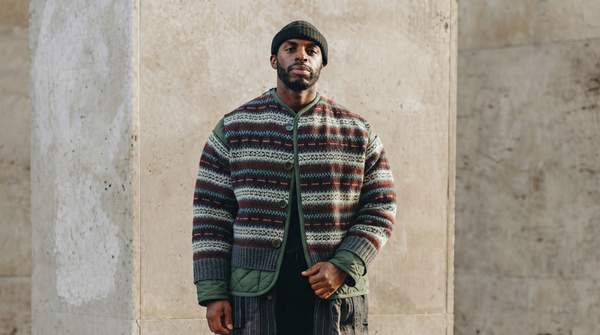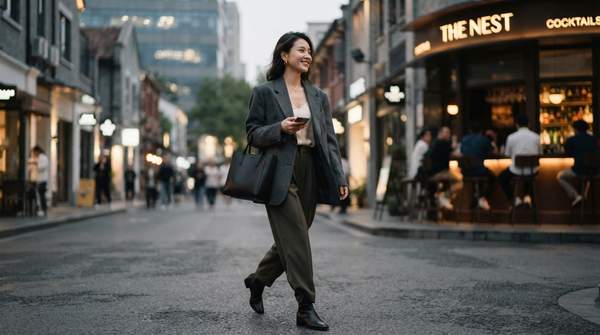
“Business in the front, party in the back—and no outfit change in between.” That is how Mandy Wong, writing for the culture publication RADII, sums up ā pǔ ruì fēng (阿普瑞风, Après style), the look that is turning Chinese office commutes into low-key nights out. The trend takes its name from the French après-ski—literally, “after skiing”—and moves that post-slope sensibility of relaxed refinement from the mountains into the city. What marks it out is not a single garment but a formula: Chinese youth are mixing sportswear, office wear, and gorpcore into outfits that work equally well at a desk and at a bar.
What is 'Après Style'?
At its most basic, Après style is a transliteration turned trend. As Wong explains, the Chinese name is a sound-alike rendering of the French après-ski, borrowing the vocabulary of Alpine post-ski socializing and applying it to urban life. The borrowed word carries a borrowed mood: the ease of having already done the demanding part of the day, dressed for whatever comes next.
The look itself is a deliberate collision of categories. Sportswear, office wear, and gorpcore—the outdoorsy, technical-clothing aesthetic—are combined rather than kept in separate wardrobes for separate occasions. The result is what Wong calls “desk-to-bar” dressing: one outfit that carries a young professional from the workday into the evening without a costume change. It is worth noting that the underlying après-ski aesthetic has been circulating in high fashion for some time; Annie Brown, writing in the South China Morning Post, traces recent interest to collections from Miu Miu, Gucci, Dior, Prada, and Chanel, all drawing on the chalet-and-slopes vocabulary. The Chinese trend adapts that vocabulary to everyday city life.
The 'Après Style' Explanatory Model
To make sense of a trend that is really a synthesis, it helps to break it into three pillars: where the name comes from, what is being mixed together, and why the mix appeals. The table below deconstructs the trend along those lines, drawing on reporting from RADII and China Culture’s social media digest.
| Pillar | What it means | Underlying principle |
|---|---|---|
| Origin | The name is a sound-alike transliteration of the French après-ski, “after skiing,” adapted from ski-resort socializing to an urban Chinese setting. | Post-effort ease: the feeling of having earned relaxation, carried into the workday. |
| Style fusion | Sportswear, office wear, and gorpcore are combined into single outfits rather than kept for separate occasions. | A “desk-to-bar” aesthetic—one outfit that transitions from work to leisure. |
| Philosophy | Comfort and versatility are prioritized, with pieces many people already own, worn in new combinations. | “Style without fuss, comfort without compromise”—relaxed sophistication that moves between busy and relaxed states. |
Read together, the pillars suggest a definition: Après style is the practice of dressing as though work and leisure are one continuous day rather than two separate performances. The fusion is the mechanism; the philosophy is the point.