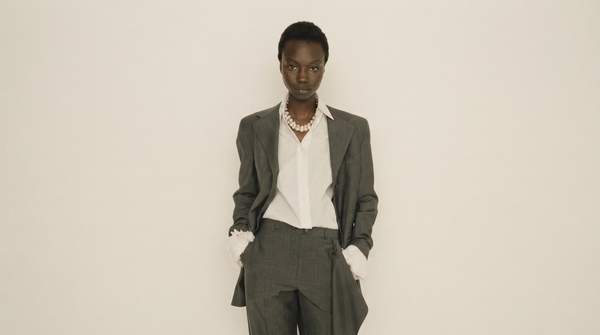
Following a season marked by no fewer than 15 creative debuts at major houses and significant international presentations like COS's first show in Seoul, the key Spring/Summer 2026 fashion trends are crystallizing around a confident new approach to tailoring, reimagined florals, and dynamic fringing, according to analyses from leading fashion publications.
This season represents more than a simple refresh of wardrobes; it signals a palpable recalibration within the industry's creative echelons. With new designers taking the helm at storied houses like Bottega Veneta, Dior, and Chanel, the resulting collections offer a compelling dialogue between heritage and modernity. The emergent trends—structured yet fluid tailoring, expressive decorative elements, and a surge of bold color—suggest a collective move towards a more nuanced and personalized form of dressing, where individual expression is prized over monolithic aesthetics. This shift is further amplified by a growing recognition of distinct global tastes, transforming a once-centralized trend cycle into a decentralized, worldwide conversation.
What We Know So Far
- The Spring/Summer 2026 season featured 15 debuts across notable fashion houses, a significant marker of creative transition, according to elle.com.
- Key trends identified for the season by ELLE UK editors include new tailoring, new florals, and fringing, alongside utility, loud layering, and sports luxe.
- At Bottega Veneta, Louise Trotter's debut collection for SS26 showcased everyday elegance through precise tailoring and innovative fringed tops constructed from recycled fibreglass.
- COS held its Spring/Summer 2026 collection presentation in Seoul, South Korea, for the first time in March, highlighting sculptural tailoring and fluid silhouettes, as reported by ellecanada.com.
- Fashion is reportedly becoming more personal in 2026, with distinct regional trends emerging in Australia, Germany, the UAE, and South Korea, according to an analysis by hercampus.com.
Deep Dive into SS26 New Tailoring Trends
The concept of tailoring for Spring/Summer 2026 is not a monolith but a spectrum, oscillating between architectural precision and relaxed fluidity. It’s a sartorial language being rewritten by a new guard of creative directors. At Dior, Jonathan Anderson's first collection reportedly fused utility with couture, presenting updated, functional versions of the iconic Bar jacket. This move speaks to a desire for clothing that is both historically reverent and pragmatically suited for modern life, a sentiment echoed across the season.
This duality was perhaps most clearly articulated in the COS SS26 collection presented in Seoul. The 40-look collection was described by the brand as a reflection of a cross between '80s power dressing and '90s minimalism. Karin Gustafson, a designer for the brand, noted the collection explores "strong shoulders and fluid tailoring," rooted in craftsmanship and materiality. This blend results in pieces that command presence without sacrificing ease—think sculptural blazers paired with flowing trousers, or structured coats crafted from materials with a crinkled, paper-like texture. It’s a tailoring that empowers through form but liberates through feel, a sophisticated response to the post-pandemic desire for clothing that is both polished and comfortable.
Similarly, Louise Trotter’s debut at Bottega Veneta was praised for its vision of "everyday elegance," a concept anchored in impeccable tailoring. The focus was less on overt statements and more on the quiet confidence of a perfectly cut coat or trouser. This "new tailoring" is less about rigid conformity and more about providing a versatile, sophisticated framework for personal style. It serves as the season's foundation, a structured canvas against which more expressive trends can play out.
Spring/Summer 2026 Floral and Fringing Fashion Predictions
If tailoring provides the structure, then florals and fringing supply the season's soul and movement. Identified by ELLE UK editors as a key trend, "new florals" suggests a departure from the quaint and predictable. While specific details on the nature of these prints remain emergent, their inclusion alongside trends like "utility" and "loud layering" implies a more graphic, abstract, or perhaps technologically-infused interpretation. The modern floral is not merely decorative; it is integrated, interacting with the garment's form and the wearer's identity in a more dynamic way. It’s less about pastoral romance and more about a bold, artistic statement.
Fringing, another standout trend, introduces a tactile and kinetic energy to the SS26 silhouette. Its most innovative application was seen at Bottega Veneta, where Louise Trotter presented fringed tops made from recycled fibreglass, according to elle.com. This choice is significant, elevating fringe from a mere embellishment to a feat of material science. It demonstrates a commitment to surface innovation and sustainability, transforming a classic bohemian detail into something futuristic and conscious. The effect is one of controlled dynamism, where movement is not just an afterthought but an integral component of the design's architecture.
Together, these decorative trends offer a counterbalance to the season's structured tailoring. They inject personality, texture, and a sense of joyful abandon into the collections. Matthieu Blazy's debut at Chanel, for instance, was described by elle.com as an "explosion of color" that juxtaposed textures, including diaphanous skirts. This interplay between the solid and the sheer, the structured and the free-flowing, defines the season's core tension and its ultimate appeal. It’s a wardrobe for a complex world, acknowledging the need for both strength and softness.
How Global Tastes Are Shaping SS26 Trends
A profound shift for 2026 is the decentralization of influence. The singular, top-down trend cycle dictated from Paris or Milan is giving way to a more pluralistic model where regional tastes actively reshape the global aesthetic. According to hercampus.com, fashion is becoming "more personal, with each country reshaping trends through its own lens." This creates a richer, more diverse sartorial landscape where global trends are not just adopted but adapted.
The report highlights several distinct national aesthetics. Australia is reportedly moving away from its signature minimalism towards a vibrant palette of pink, orange, and yellow. Germany, in contrast, is embracing a Y2K-inflected maximalism, favoring bold colors like orange, green, and pink. In the United Arab Emirates, a trend towards "modern modesty" is taking hold, characterized by modest silhouettes and a sophisticated, earthy color scheme of brown, olive, and dusty rose. Meanwhile, South Korea's fashion scene, heavily influenced by the global reach of K-pop, is leaning into futuristic elements like liquid metallic fabrics and balloon silhouettes, with a preference for digital-age colors like lavender and lime green.
The industry's global fragmentation reflects a more mature and responsive approach. COS's decision to stage its SS26 show in Seoul clearly acknowledges South Korea's role not just as a powerful market, but as a global trendsetter. This localization means key SS26 trends—tailoring, florals, fringing—will likely manifest in radically different ways from Berlin to Dubai, creating a more interesting and authentic expression of contemporary style.
What Happens Next
As runway presentations conclude, the focus shifts from the catwalk to the consumer. The 40 looks from the COS collection are already available online and in-store, marking the public's first tangible opportunity to engage with the season's new direction. The commercial performance of these early collections will be a critical test for the new creative visions at major houses.
The industry will closely watch the retail success of debut collections from Louise Trotter at Bottega Veneta, Jonathan Anderson at Dior, and Matthieu Blazy at Chanel. Their ability to translate runway concepts into commercially viable products will determine whether these new aesthetic codes become lasting signatures or transient experiments. Several open questions will define the coming months.
How will the abstract concept of "new florals" be interpreted by high-street and luxury brands alike? Will the tension between the '80s power shoulder and '90s minimalism find a harmonious balance in everyday wear? And perhaps most importantly, will the push towards innovative, sustainable materials—like recycled fibreglass—move from a niche runway highlight to a mainstream manufacturing standard? The answers will unfold not in editorials, but through consumer choices worldwide.
-- Adrian Vale, The Modern Dispatch