City apartments often groan under accumulated possessions, each object a testament to a purchase, trend, or fulfilled desire. Yet, despite relentless acquisition, a growing body of evidence suggests a positive relationship between a minimalist lifestyle and well-being. If the pursuit of more isn't making us happier, how can we integrate minimalist living principles into our daily lives to reap these reported benefits?
The concept of minimalism is hardly new, with philosophical roots stretching back to Stoicism and various Eastern philosophies. But its contemporary resurgence feels distinctly different. It’s less about a monastic retreat from the world and more about a strategic engagement with it. In a culture saturated with targeted ads, one-click shopping, and the curated materialism of social media, minimalism has emerged as a conscious counter-narrative. It offers a framework for navigating the cacophony of consumerism, not through outright rejection, but through deliberate selection. The devil, as always, is in the details of what we choose to keep, and more importantly, why.
What Is Minimalist Living?
Minimalist living is a philosophy centered on intentionality, where individuals consciously curate their lives to include only the things they truly need, use, or love. It is not about deprivation or stark asceticism, but rather about removing excess to make room for what genuinely matters. Think of it as the difference between a cluttered antique shop and a meticulously planned museum exhibit. In the former, value is obscured by volume; in the latter, each piece is given space to be appreciated precisely because it was chosen with purpose. As defined by proponents Joshua Fields Milburn and Ryan Nicodemus, "Minimalism is a tool to rid yourself of life’s excess in favor of focusing on what’s important—so you can find happiness, fulfillment, and freedom."
Minimalism, a holistic reassessment of personal priorities, extends beyond the physical into digital, financial, and mental realms of our lives. At its core, it is guided by a few key principles:
- Intentionality. Every item, commitment, and even relationship is evaluated based on the value it adds to one's life.
- Focus on the essential. It involves identifying and eliminating the non-essential—the clutter that distracts from core goals and passions.
- Quality over quantity. Prioritizing fewer, better things over a multitude of mediocre ones, whether in possessions, friendships, or experiences.
- Freedom from materialism. Minimalistic consumers, as noted in a study published in an article from the National Center for Biotechnology Information, tend to abstain from materialism and reduce their dependence on material things for instant gratification.
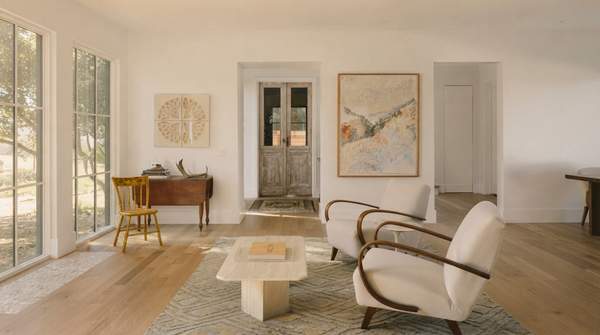
How Does Minimalism Enhance Well-being and Reduce Clutter?
The well-documented connection between our external environment and internal state shows a consistent positive relationship between voluntary simplicity and well-being. A 2021 paper cited by Becoming Minimalist reviewed 23 separate empirical studies to reach that conclusion. Reducing physical clutter can reduce mental clutter, which in turn reduces stress. Chaotic and overstuffed living spaces often lead to chaotic minds; simplifying one’s environment provides a greater sense of control and order, a powerful antidote to stress and anxiety.
The impact of clutter on behavior and health is surprisingly direct. For instance, cluttered bedrooms are associated with poor sleep quality, and the simple act of removing excess possessions can lead to better rest. In a 2016 study titled 'Clutter, Chaos, and Overconsumption,' researchers found that participants in a chaotic kitchen environment consumed significantly more cookies than those in a standard, orderly kitchen. This suggests our surroundings can subtly influence our self-control and decision-making. Conversely, a 2020 study by Lloyd & Pennington, detailed on Seasoned Journeys, linked materialism with lower levels of personal wellbeing, higher financial debt, and a lack of environmental concern. The same study indicated that adopting a minimalistic lifestyle afforded a range of wellbeing benefits, including a greater sense of autonomy, competence, mental space, and awareness.
Enhanced well-being stems from a fundamental shift: research from the McCombs School of Business at The University of Texas shows experiences bring more lasting happiness than material possessions. Minimalism encourages this pivot. Spending less time, money, and energy acquiring and maintaining physical goods frees up resources for travel, hobbies, education, or time with loved ones—activities fostering growth and memories. Dr. Mark Travers, a psychologist, notes in The Optimist Daily that "Minimalism offers a pathway to greater autonomy, competence, and mental clarity," allowing individuals to focus on themselves and discover what they truly want.
Practical Steps to Integrate Minimalism into Your Daily Routine
Adopting minimalist principles is a gradual process, not an overnight transformation. It involves unlearning consumerist habits and cultivating intentionality, beginning with small, deliberate actions that build momentum over time. The journey can be broken down into a series of manageable steps that address both existing clutter and the habits that create it.
- Define Your Purpose: Before you discard a single item, clarify your motivation. Are you seeking financial freedom, more time for creative pursuits, a calmer home environment, or a more sustainable lifestyle? Having a clear "why" will serve as your anchor when the process becomes challenging. This internal work is the foundation upon which a sustainable minimalist practice is built.
- Start Small and Categorize: The idea of decluttering an entire home can be paralyzing. Instead, begin with a single, low-stakes area, such as a junk drawer, a bookshelf, or the digital desktop on your computer. Another popular method is to tackle one category of items at a time—all your books, all your clothes, all your kitchen gadgets—regardless of where they are in the house. This prevents you from simply shuffling clutter from one room to another.
- Implement a Sorting System: As you go through your items, create distinct piles: keep, donate/sell, and discard. To guide your decisions, ask yourself a series of direct questions for each object: Do I use this regularly? Does this item serve a clear purpose in my life right now? Does it bring me genuine delight? If the answer to all is no, it’s likely time to let it go.
- Embrace the "One In, One Out" Rule: To prevent clutter from re-accumulating, adopt a maintenance strategy. The "one in, one out" rule is simple: for every new item you bring into your home, an old item of the same category must leave. This forces you to critically evaluate every potential purchase and maintains the equilibrium you’ve worked to create.
- Practice Mindful Consumption: The ultimate goal is to shift from a reactive decluttering cycle to a proactive state of conscious consumption. Before making a purchase, pause. Ask yourself if you truly need the item or if it's an impulse buy. Consider borrowing, renting, or buying secondhand before purchasing new. This shift not only reduces clutter but also has significant financial and environmental benefits, helping to preserve resources and lower waste.
Why Minimalist Living Matters Now
The modern embrace of minimalism is more than a fleeting aesthetic trend; it is a direct response to the pressing anxieties of our time. We live in an era defined by the paradox of choice, where endless options often lead to decision fatigue and dissatisfaction rather than freedom. The United Nations Environment Programme has noted the disastrous consequences of materialism, and humanity is consuming more natural resources than ever before. In this context, minimalism offers a tangible, personal way to push back against unsustainable consumption patterns.
Economically, the lifestyle provides a practical buffer against uncertainty. A 2023 study mentioned by Becoming Minimalist found that adopting minimalist practices saves substantial money through reduced and more prudent consumption. This financial resilience is increasingly appealing as the cost of living rises. Psychologically, it offers a sanctuary from the relentless noise of digital life. By curating our physical and digital spaces, we create pockets of calm and focus, allowing for deeper engagement with our work, our passions, and each other.
Ultimately, minimalism matters because it returns agency to the individual. It declares a life’s value is not measured by possessions, but by the quality of experiences and depth of contributions. This is a quiet rebellion against the notion that happiness can be bought, proposing instead that it must be cultivated from within, in intentionally created spaces.
Frequently Asked Questions
Is minimalism just about having white walls and no furniture?
No, this is a common misconception based on a specific aesthetic. Minimalism is a philosophy of intentionality, not a design style. A minimalist home can be colorful, cozy, and full of personality. The key is that every item in it is chosen deliberately because it serves a purpose or brings joy, rather than being there by default.
How can I be a minimalist if I have a family and kids?
Minimalism is adaptable to any living situation, including family life. For families, it often means focusing on quality over quantity. For example, studies have shown that when toddlers are provided with fewer toys, they engage in longer, more creative periods of play. It can also mean prioritizing family experiences over material gifts and teaching children the value of conscious consumption from an early age.
What is the difference between minimalism and frugality?
While they often overlap, their core motivations differ. Frugality is primarily concerned with saving money and spending as little as possible. Minimalism is primarily concerned with intentionality and living with only what is essential. A minimalist might spend a significant amount of money on a single, high-quality, long-lasting item rather than buying several cheap alternatives, a choice that might not be considered frugal in the short term.
How long does it take to become a minimalist?
Minimalism is an ongoing practice, not a destination. It’s a continuous process of evaluating your life and possessions to ensure they align with your values and priorities. The journey begins with the first intentional decision and evolves as your life and needs change over time.
The Bottom Line
Integrating minimalist living principles is less about a radical purge and more about a thoughtful realignment of priorities. It is a versatile tool for reducing stress, enhancing well-being, and fostering a more sustainable and intentional existence. The journey begins not with a dumpster, but with a single question asked of a single object: is this truly essential to the life I want to live?