Contemporary art offers you a spectrum of participatory experiences, and the difference between them comes down to one question: what role does the audience actually play? The answer ranges from conceptual interpreter, to physical performer, to immersed body inside a digital environment. Understanding these three modes—conceptual co-creation, physical activation, and digital immersion—lets you match an exhibition to the kind of engagement you actually want, rather than arriving expecting a contemplative encounter and finding yourself inside a spectacle.
Understanding Audience Participation in Contemporary Art
Interactive art, as the Tate defines it, describes art that relies on the participation of a spectator. That reliance is the common thread across otherwise very different practices: without the visitor, something essential is missing. What varies is what is missing—meaning, physical manifestation, or the evolving shape of a digital environment.
The roots of this participatory turn are older than the technology now associated with it. As the Museum of Modern Art Association's editorial explains, interactive art's lineage reaches back to the Happenings of the 1960s, conceptual art, and performance pieces where the audience's response shaped the work. Digital tools did not invent participation; they amplified its scope and speed to an unprecedented degree. Today, artworks can even exist simultaneously for thousands of connected visitors, where a change made by one user instantly updates the experience for everyone else.
This matters for you as a visitor because the mode of participation determines the character of your encounter. Some works ask for quiet cognitive work; others require your body; others envelop it. Knowing which is which is the first step toward a satisfying visit.
Conceptual Co-creation: The Mind as the Canvas
The most subtle mode of participation happens almost invisibly: in your head. Here the artwork is not fully realized without the viewer's mental engagement—your perception and interpretation complete it.
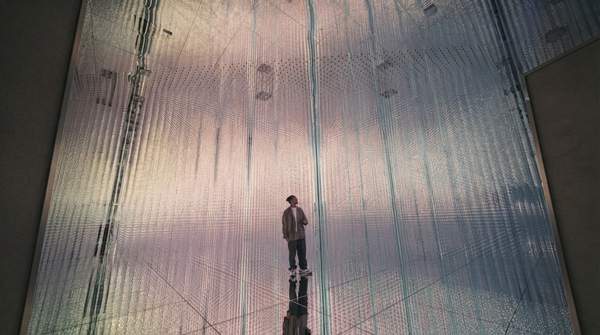
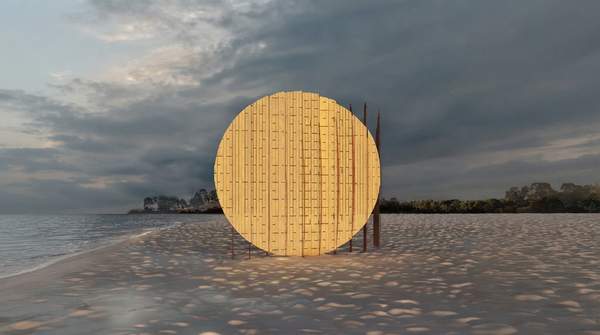
Olafur Eliasson is a key artist in this category. Analysis of his practice describes a creator whose ambition extends beyond making objects: he aspires, as Alejandra de Argos's profile puts it, "to educate the viewer so that he opens himself to new forms of perception and understanding of the world through his participation and inclusion in the work of art." Working from a broadly Kantian view that the subject projects subjective schemes onto the world to give it cultural meaning, Eliasson uses visual games to produce experiences that can be purely sensory—getting the viewer to come out of himself and see himself in the midst of the work—or to provoke active participation.
Your role, in other words, is that of an active interpreter, and your internal cognitive process is the primary site of interaction. The intended takeaway is a heightened awareness of perception, self, and environment—fostering new ways of seeing rather than delivering a spectacle. His installations often use natural elements like light, water, and air to make you notice your own noticing. If you leave an Eliasson room recalibrating how you perceive weather outside the museum, the work has done its job.
Physical Activation: Engaging the Body in Art
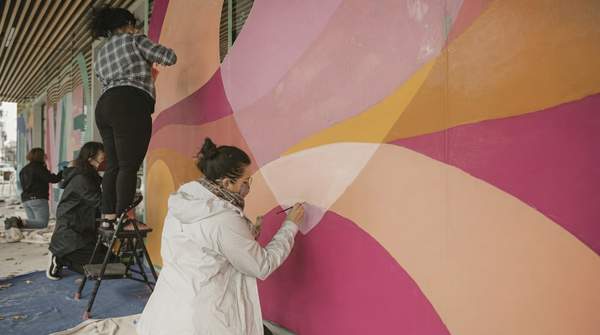
A second mode requires something more tangible: direct bodily engagement with the artwork's physical elements. Here participation involves your physical presence and actions as essential to the work's manifestation. You are not interpreting a finished object; you are performing or manipulating something that would otherwise remain inert or incomplete.
The Tate's account of participatory practice frames this as work that blurs the boundaries between art and life—the artwork is created through actions performed by the artist or other participants, live or spontaneous. Your body becomes the instrument. The takeaway tends to be a direct, often communal experience: a shared, ephemeral event rather than a durable object, and a re-evaluation of where art ends and ordinary life begins.
The artist Lara Saget describes a comparable impulse from the maker's side: "I have a desire for decentralization in the art world, so that fuels me in making new systems for art to exist. I have a desire for connection, so I perform." Performance, in her telling, is what connection demands—a reminder that physical activation is often motivated by a wish to redistribute the artistic act itself.
Choose this mode when you want presence and shared experience over polish—accepting that the work may be brief, situational, and impossible to revisit in the same form.
Digital Immersion: Worlds of Sensory Engagement
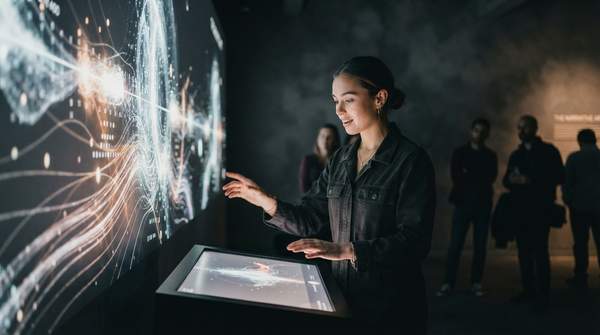
The third mode surrounds you. Art that responds to audience input—movement, touch, voice, or data—makes the viewer an active part of the creative process, as the Museum of Modern Art Association's editors explain. Interactive digital art erases the line between artist and audience, evolving in real time based on participation rather than observation. Sensors, AR/VR, AI, and real-time engines allow the work to adapt to what you do.
Collectives like teamLab and Random International are leading exponents. The Arts Management and Technology Laboratory's research describes how teamLab's installations use digital projection, light, sound, and motion sensors to craft continually evolving, computer-programmed artworks—often large-scale and site-specific—that merge physical and virtual spaces into dynamic, responsive environments. The intended visitor experience is explicitly embodied: the collective hopes visitors will use their bodies to roam, immerse, explore, and create new experiences with others.
The takeaway here is sensory and social at once—these works deliberately blur the lines between individual identity and the external world. Because the experience is mediated by digital technology and often responds to data about visitors, it also raises general questions about privacy and consent that immersive venues increasingly have to answer. If full-body immersion in a responsive, spectacle-rich environment is what you're after, this is your category.
Choosing Your Interactive Art Experience: A Decision Framework
The framework below classifies the three modes by their mechanism of participation and the relationship each establishes between artwork and viewer. Read the "Your Role" row first: it is the fastest way to identify the engagement level you're seeking, whether that means co-creating meaning or being immersed in a spectacle.
| Mode | Mode of Interaction | Your Role as the Audience | The Intended Takeaway | Example Artists |
|---|---|---|---|---|
| Conceptual Co-creation | Perception and interpretation are integral to completing the artwork's meaning | Active interpreter—your subjective experience completes the art | Heightened awareness of perception, self, and environment; new ways of seeing | Olafur Eliasson |
| Physical Activation | Direct bodily engagement, often transforming the physical space or the artwork itself | Performer or manipulator—your actions manifest the work | A shared, ephemeral experience that re-evaluates the boundary between art and life | Participatory and performance-oriented practices (e.g., Lara Saget's performance work) |
| Digital Immersion | Envelopment in a sensory-rich, technology-mediated environment that responds to your input | Immersed participant influencing an evolving work in real time | A bodily, social, continually changing experience merging self and environment | teamLab, Random International |
The reasoning behind this classification is straightforward: each mode locates the interaction in a different place—mind, body, or environment—and therefore rewards a different motivation for visiting. If you arrive seeking intellectual and introspective transformation, Eliasson-style co-creation fits. If you want to do rather than look, seek physically activated works. If you want to be enveloped alongside others, digital immersion delivers.
Aligning Your Desires with Interactive Art
To choose an interactive art experience that best suits your desired level of engagement, consider whether you seek conceptual co-creation, physical activation, or digital immersion, and reflect on your motivations for attending—connection, discovery, sensory stimulation, or escape all point toward different modes. Interactive and immersive experiences are frequently reported to support socialization and well-being alongside novelty, which is worth weighing if a shared visit is part of your plan.
A measurable indicator of success is simple: a reader's ability to articulate their preferred mode of interaction and identify artists or exhibition types that align with their interests. Before buying a ticket, name your mode aloud—co-create, activate, or immerse—and check the exhibition's description for the matching mechanism: works said to depend on perception, on visitor actions, or on responsive digital environments. If the description matches your sentence, you've found your show.
Sources
- Participatory art — Tate
- Interactive Digital Art: How Audiences Become Part of the Creation — MoMAA | Affordable Art Gallery & Lifestyle
- Olafur Eliasson. The Artist as Scientist — Alejandra de Argos
- Lara Saget's Sculptures of Divinity and Spirituality — Office Magazine
- What are the Impacts of Digital-Based Immersive and Interactive Art on Audiences? — Arts Management and Technology Lab