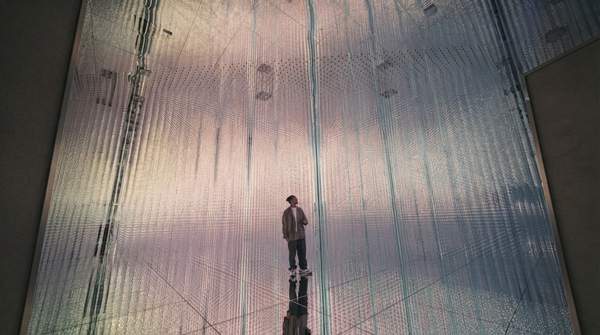
teamLab is a Tokyo-based art collective whose immersive digital installations do something traditional art never asked of viewers: they make the audience's presence and actions part of the work itself. The collective describes its environments as "worlds of artworks without boundaries," and it names the experience at their heart "co-creation" — a model in which the artwork continuously evolves based on collective audience presence and interaction. Understanding why this matters requires two of teamLab's own concepts, "Ultra Subjective Space" and "Borderless," and a look at how the audience's role in art has changed over time.
The Dawn of Immersive Art: From Spectator to Participant
For most of art history, the relationship between artist, artwork, and viewer was clearly separated. The artist completed the work; the viewer observed it. The painting on the wall, the sculpture on its plinth, even the film in its theater — all were finished before the audience arrived, and the audience's job was to look. Scholars of interactive media art describe this as a "spectator-centered approach," and they trace how the field has evolved from that model toward something more participatory and collaborative — a shift they argue redefines the boundaries of artistic creation and engagement.
That shift did not happen all at once. Early interactive and digital art invited the viewer to do something — press a button, trigger a sensor, influence a projection. But the deeper change, the one teamLab embodies, goes further than interaction. It makes participation the foundational element of the work, so that the piece is not complete without the people inside it. This is a deliberate artistic choice, contrasting with historical art forms where the artwork is complete without viewer interaction.
teamLab: A Collective Redefining Art
teamLab presents itself not as a studio of individual auteurs but as an art collective, and its self-description emphasizes experience over objects. Its exhibitions are described as "digital playgrounds for all ages," filled with dynamic, visually morphing works that the collective frames as a testament to the advancement of and growing interest in digital art, as well as technology's ability to nurture creativity and curiosity.
What distinguishes teamLab from other digital art producers is that its technology serves an explicit philosophy. The collective states that its immersive installations "explore alternative forms of perception" through its concept of Ultra Subjective Space, and that its interactive activities use technology "to cultivate individual creative freedom within cooperative environments" — the experience teamLab calls co-creation. In other words, the projections and responsive environments are not spectacle for its own sake; they are instruments for a specific theory about how people should encounter art and each other.