Not every trend on the A/W 2026 runways deserves a place in your wardrobe, and the good news is that this season makes selective shopping unusually easy. Across the major trend reports, four directions stand out as genuinely wearable: rich textures such as velvet, bouclé and brushed wool; cherry and ketchup-red accents; impactful, structured outerwear; and reinvented classics from florals to tweed. Vogue's own verdict on the season is that it "feels both wearable and exciting," pairing clean silhouettes with expressive texture rather than forcing a single look on everyone. Below, I've built a decision matrix that rates each trend against the three criteria that matter to a conscious shopper: how many ways it can be styled, whether it can be sourced sustainably, and whether it will still look intentional a year from now.
Introduction: Navigating A/W 2026 Trends with Purpose
The clearest theme emerging from Autumn/Winter 2026 coverage is that the era of dutifully following a trend list is over. Espiritu's trend report describes the season as one where "styling is just as important as the pieces themselves," with designers reinterpreting familiar aesthetics in unexpected ways. A guide published by Old Money® quotes Maria Grazia Chiuri's framing directly: "2026 is the year fashion becomes truly democratic. It's no longer about following trends, but about interpreting them according to your own personal style."
That framing matters for how you shop. If interpretation beats obedience, then the right question is never "what is trending?" but "which trending pieces can I style in multiple contexts, source in materials I feel good about, and still wear in two winters' time?" This article is built around exactly those three filters, and every rating in the matrix below traces back to what the season's reporters actually observed on the runways and in stores.
One caveat before we begin: this is a curated selection of four womenswear directions drawn from published trend reporting, not an exhaustive catalogue of everything A/W 2026 offered, and not the result of product testing. It's a decision framework, not a shopping mandate.
Key Autumn/Winter 2026 Trends for a Wearable Wardrobe
These are the four directions the season's reporting supports as the most wearable and flexible:
- Rich textures — velvet, bouclé and brushed wool. Vogue reports that designers "embraced the art of contrast" by pairing minimalist silhouettes with rich textures, and Who What Wear's shopping editor highlights brushed cashmere jumpers and checked wool-blend coats as defining winter pieces. Texture works with nearly any personal aesthetic because it adds interest without demanding a bold colour commitment.
- Cherry and ketchup red accents. Fabrics Galore notes that "pops of colour" for the season include "slightly darker reds in ketchup shades," while stylist Danielle Gervino calls cherry red "the fresher color update for 2026" and recommends wearing it as "a small pop against an otherwise neutral outfit" rather than head to toe.
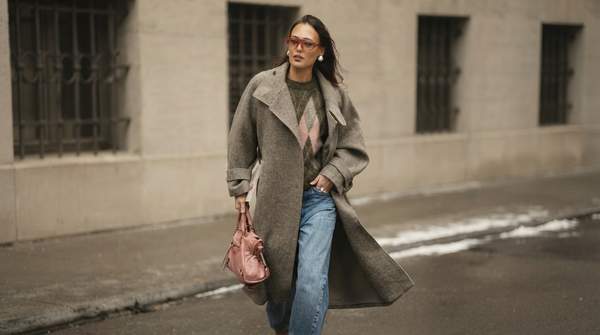
- Impactful, structured outerwear. Marie Claire's coat-trend report finds "a style for every type of shopper" this season, from fur-trimmed coats in cherry red at Fendi to Gucci's mod-inspired car coat and collarless dusters at Kallmeyer. Outerwear is the season's biggest stage, and it's a category where one good coat carries dozens of outfits.
- Reinvented classics — florals and heritage fabrics. British Vogue notes that Simone Rocha and Erdem showed flora and fauna "from draped dresses to blouses, proving that the look can move between moods and occasions," while Espiritu describes heritage aesthetics reinterpreted with "ruffles, lace, flowing silhouettes" and a romantic edge.
A/W 2026 Wearable Trends: Your Decision Matrix
Here is the framework at the heart of this piece. Each trend is rated across the three criteria, with the evidence behind each rating drawn from the reporting above. Read the versatility column first if you're on a budget; read the relevance column first if you're trying to break a trend-chasing cycle.
| Trend | Aesthetic versatility | Potential for sustainable integration | Long-term relevance |
|---|---|---|---|
| Rich textures (velvet, bouclé, brushed wool) | High — works paired with minimalist silhouettes or layered expressively, per Vogue's contrast-styling report | Strong — natural fibres like wool, tweed, velvet and cashmere are the season's headline materials, per Kauri Store's sustainability-focused season preview | Strong — texture as a styling device outlasts any single fabric of the moment |
| Cherry/ketchup red accents | High as an accent — Gervino styles it as "a small pop against an otherwise neutral outfit"; the two-tone colour approach reported by Fabrics Galore makes it flexible | Moderate — colour itself isn't the sustainability variable; the opportunity lies in accessories, existing red pieces already owned, or garments in recycled materials | Mixed — Gervino notes deeper reds have "been trending for the last few fall seasons," but the specific cherry shade is a 2026-specific update |
| Impactful outerwear (structured coats) | High — Marie Claire identifies options "for every type of shopper," spanning vintage-mod, collarless minimalism and bold colour | Strong — durable wool blends and well-made coats are precisely the "buy less, choose better" category Kauri Store highlights | Strong — a well-constructed winter coat is foundational regardless of season-specific details |
| Reinvented classics (florals, heritage fabrics) | High — British Vogue's florals reporting shows the look moving "between moods and occasions"; Espiritu frames heritage pieces as open to personal styling | Strong — Kauri Store pairs the season's heritage fabrics with "recycled materials and creative upcycling" | Strong — classic roots updated with current details age gracefully once the novelty fades |
The pattern in the matrix is worth stating plainly: the two categories where a single purchase does the most work — outerwear and reinvented classics — also score best on longevity. Red accents score highest on versatility-per-pound if you buy them as a small accessory rather than a full garment, but they carry the most trend risk as a specific shade.
Integrating Trends Sustainably into Your Existing Wardrobe
The most encouraging thread in this season's reporting is that sustainability and the trending aesthetic point in the same direction. Kauri Store's season preview argues that A/W 2025-26 "opens under the banner of awareness," with designers focusing on natural fabrics and durable workmanship: "Wool, tweed, velvet, and cashmere are the protagonists of a return to touch, quality, and time," alongside "recycled materials and creative upcycling." That means the materials you'd want to buy for durability are the same ones the runways are featuring.
Practically, that translates into three shopping rules. First, match the trend to a natural, durable fibre where one exists: a wool-blend or ethical-cashmere knit satisfies the brushed-texture trend and lasts far longer than an acrylic equivalent. Second, favour two-sided and versatile constructions where the market offers them — Who What Wear highlights a reversible checked coat that can show "just a peek of print" or "a full checked look," effectively two coats for the price and materials of one. Third, use accessories as your trend experiment: Gervino's advice is that "most of these fall 2026 fashion trends can be incorporated through one updated piece or styling detail," whether that's a cherry-red accessory against neutrals or a scarf tied to refresh an existing outfit.
Old Money® guide reporting makes the same point from the consumer side, noting oversized scarves in cashmere or merino wool and versatile bags among the season's essential accessories, and describing sustainable fashion for winter 2026 as "no longer a trend but a necessity." One honest limitation: a trend's sustainability potential depends on the specific piece you buy, not the trend itself — a velvet dress can be responsibly made or not, and the season's reporting establishes the opportunity, not a guarantee.
Making Informed Wardrobe Updates for A/W 2026
The decision this framework supports is straightforward: prioritize A/W 2026 trends that offer high aesthetic versatility and long-term relevance, focusing on durable and eco-friendly materials for sustainable integration. Structured outerwear and reinvented classics earn the strongest scores on both counts; rich textures follow closely behind; and red accents are best approached as a low-commitment accessory purchase rather than a wardrobe overhaul.
The measurable indicator of success is a wardrobe composed of versatile, high-quality pieces that remain stylish and functional across multiple seasons, reducing the need for frequent trend-driven purchases. Next winter offers a natural test: pull out what you bought this season and see how much of it still feels current. If the matrix holds, most of it will — and the pieces that don't will be the small, cheap experiments rather than the investments.
Sources
- 6 Key Fall 2026 Fashion Trends to Know This Season — Vogue
- The Biggest Autumn/Winter 2026 Trends — Espiritu
- Fall Winter 2026 Outfits: The Complete Guide for Men and Women to the — Old Money®
- COS Just Perfected the 5 Chic Winter Trends Defining 2026 — Who What Wear
- 7 Fall Fashion Trends for 2026 You’ll Actually Wear - Danielle Gervino
- I’m Retiring My Puffer Coat This Season—These 5 Coat Trends Are Taking Over — Marie Claire
- Fall/Winter 2025-2026 Fashion: Sustainability, Comfort, and Conscious — Kauri Store
- Autumn Winter 2026 Fashion Trends: Styles to Sew Now — Fabrics Galore
- The Key Autumn/Winter 2026 Trends To Know Now — British Vogue