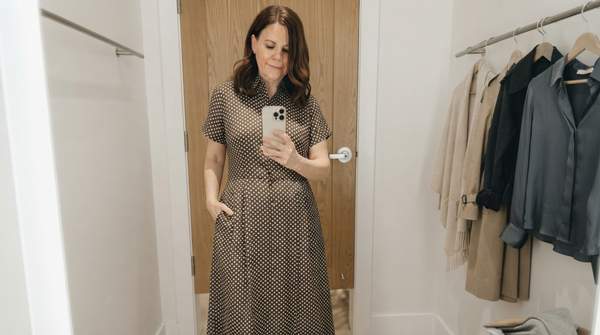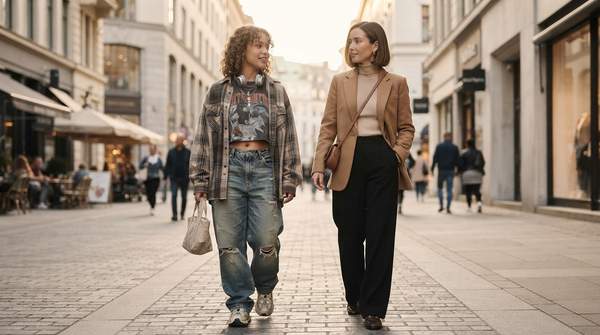
The generational fashion divide comes down to motivation, not just clothing. Gen Z favors loose fits, Y2K revivals, and eclectic individual styling as a statement of personality; Millennials built their wardrobes around polished, structured looks that signaled membership in a recognizable "style tribe." Understanding that difference explains why each generation reaches for the same garment, a blazer or a pair of jeans, and wears it in opposite ways.
The Generational Divide in Fashion
Dressing has always been generational shorthand, and the current friction is unusually visible because it plays out on social media. Writing in Newsweek, Melissa Fleur Afshar reported on the viral "millennial-coded" debate, in which Gen Z mocks certain Millennial staples as outdated, while Millennials push back on the criticism.
The frustration Millennial creator Pfeiffer described is not new, as she acknowledged: "Younger generations criticizing older generation's style choices is nothing new: millennials did it with Gen X and boomers." What has changed is the medium. Millennials formed their fashion identities in the early 2010s, when, as Pfeiffer recalled, print magazines still dominated and "fashion websites really created style tribes that you would identify with." Gen Z came of age with an endless stream of street style on TikTok and Instagram, which fragments any single dominant aesthetic.
Gen Z's Eclectic Self-Expression
Commentators broadly agree that Gen Z style prioritizes individuality. Style coach Tami Harrigan told Newsweek that "Gen Z's style is more relaxed and focused on comfort, self-expression, and individuality," describing looser fits and bold, nostalgic, eclectic pieces drawn from the Y2K era, with oversized blazers preferred over fitted ones when a dressier look is called for.
The Y2K revival is telling, because Gen Z was too young to have worn those looks the first time. Reviewed's analysis calls their attachment to the trend "a kind of borrowed nostalgia," driven less by memory than by "an appetite for novelty and playful dressing." That appetite has revived dresses over jeans, platform shoes, metallics, and micro-miniskirts. In an ironic twist, Reviewed also notes Gen Z now embracing skinny jeans, the very silhouette Millennials made a signature, as a deliberate, self-aware act of nonconformity rather than a mainstream default.
Millennial Style: Polished Identity and 'Style Tribes'
Millennial fashion, by contrast, grew out of a desire to fit into a defined aesthetic. As Harrigan put it, backing Pfeiffer's viral thesis, Millennial style is "less about showcasing personality through individual pieces than about dressing to fit in with a community." That community logic produced cohesive, polished wardrobes: fitted blazers, tailored denim, and looks that read as intentional from head to toe.
Those habits persist, even as the pieces evolve. Who What Wear's trend coverage identifies barrel and horseshoe leg jeans as the shape of choice for shoppers in their thirties, describing them as "not too baggy, and certainly not too skinny," practical enough for the office and casual enough for trainers. Meanwhile, Reviewed observes that Millennials who pioneered Y2K's flashier moments have moved the opposite way, toward quiet luxury and capsule wardrobes built on "tailored, well-made pieces" that would not have looked out of place in a style-tribe era.
Fashion and Values: Sustainability in Focus
The values dimension is more complicated than generational stereotypes suggest. McKinsey research led by senior partner David Feber finds that the bulk of consumers of all age groups now prioritize price, quality, and convenience, a shift from three years earlier, when consumers expressed greater willingness to pay more for sustainable goods. Willingness to pay a premium for sustainability has declined across all age groups, not just the younger ones.
Yet the generational gap has not vanished: McKinsey reports that about 40 percent of Gen Z and Millennial consumers still say environmental impact is an extremely or very important factor in purchasing decisions, nearly double the rate of boomers. So on sustainability, the two generations look more like allies than opponents, differing more in aesthetic philosophy than in stated values.
Gen Z vs. Millennial Fashion: A Comparative Framework
Reading the evidence together, the stylistic differences map consistently onto two underlying philosophies. The table below pairs each fashion element with the generation's approach and the motivation driving it, so the same garment can be interpreted both ways.
| Fashion Element | Gen Z Approach | Millennial Approach | Underlying Philosophy |
|---|---|---|---|
| Jean silhouettes | Baggy jeans, plus skinny styles worn with an ironic, self-aware twist | Structured wide-leg, barrel, and horseshoe leg jeans | Gen Z adopts or discards fits to express individuality; Millennials, who made skinny jeans a signature, now favor tailored practicality |
| Blazer fits | Oversized blazers for formal occasions | Fitted blazers as a signature, polished look | Gen Z rejects the fitted blazer as "outdated" and millennial-coded; Millennials built polished looks for style-tribe alignment |
| Overall aesthetic | Eclectic, nostalgic Y2K pieces, bold accessories, looser fits | Cohesive, put-together looks aligned with recognizable trends | Borrowed Y2K nostalgia and novelty-seeking versus a generation raised to fit into a specific aesthetic community |
| Sustainability | About 40% say environmental impact is extremely or very important when buying | The same roughly 40% figure applies to Millennial consumers | Both generations outscore boomers on sustainability, while overall purchasing priorities lean toward price, quality, and convenience |
The pattern across every row is the same: Gen Z treats clothing as a personal statement, even to the point of ironic revival, while Millennials treat clothing as a signal of belonging to a well-defined aesthetic. Neither approach is inherently more fashionable, and, as the sustainability figures show, neither maps neatly onto virtue.
Navigating Generational Style: Understanding the 'Why'
To effectively understand and appreciate generational fashion, focus on the underlying values and cultural contexts rather than just the specific trends. Silhouettes rotate; the deeper divide, between individual self-expression and community-aligned personal style, is structural, shaped by whether a generation came of age with print magazines and style tribes or with an infinite scroll of street style.
The practical decision for any reader, whatever their age, is to ask which motivation a garment serves before adopting or discarding it. The measurable indicator to watch going forward is the emergence of new "coded" fashion labels, or the ironic adoption of previously "outdated" styles by a younger generation, as with Gen Z's revival of skinny jeans and Y2K pieces. When the next "millennial-coded" or "Gen Z-coded" label appears, it will follow the same pattern documented here: criticism of a predecessor's aesthetic, followed by an eventual ironic revival.
Two boundaries are worth keeping in mind. These observations describe general trends in Western fashion and expert commentary from fashion writers and coaches, not sociological research, and they will not hold for every individual within either generation. Pfeiffer herself hopes Millennials will "embrace their style without feeling pressure to keep up with trends" and that Gen Z will develop "a more diverse perspective on personal style," which may be the most durable takeaway of the whole debate.
Sources
- Why Gen Z loves mocking "millennial-coded" fashion—Experts explain — Newsweek
- The generational style gap: what divides Gen Z and Millennial fashion — Reviewed
- Team Millennial vs. Team Gen Z: 9 Major Fashion Trends Dividing the Pack in 2025 — Who What Wear
- The price is not right: Gen Z’s sustainable-fashion conundrum — Mckinsey