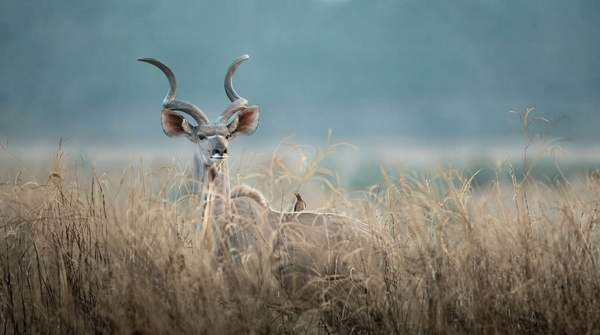
The single most important rule of ethical wildlife photography is simple: the animal's welfare always comes before the image. Every major conservation and photography organization agrees on this point. The practical work of ethical photography happens in two phases—preparation before you leave and conduct in the field—and this guide breaks both into a checklist you can actually use, including the often-misunderstood line between responsible luring and harmful baiting.
The Foundation: Prioritizing Animal Welfare
Why does this principle come first? Because wildlife cannot consent. As one literature review of photography ethics puts it, "Wildlife is often unable to defend itself or communicate with us unlike human subjects," which is why photographers must put "the animals' welfare first." The International League of Conservation Photographers, whose principles the U.S. Fish and Wildlife Service highlights, states that consideration for the welfare of animals and the integrity of landscapes "will be placed above all else"—including not only the moment of capture but how images are used and the example a photographer sets for others.
The operating mindset is what photographer and marine biologist Gal Kahn calls the "fly on the wall" concept: causing as little disturbance as possible. The Mammal Society's position statement frames the same idea from the animal's side—use a long lens rather than "getting close" so that the animal is not aware of your presence by sight, sound or smell. The test is behavioral: if the animal notices you and changes what it is doing, you have crossed a line.
Pre-Trip Preparation: Setting the Stage for Ethical Encounters
Ethics begins before the camera comes up to your eye. Research the species you hope to photograph and its behavior, including how it might respond to humans. Audubon's guide to ethical bird photography makes research the first step in judging whether any technique could be harmful: "Always research the species and its behavior to better understand the answer" to the question "Could this be harmful to the bird?"
Preparation also has a technical dimension. Kahn recommends setting your camera immediately upon arrival based on what your research tells you to expect, and arriving early to take practice shots and fine-tune settings for the lighting. Fumbling with controls at the critical moment is exactly when disturbance happens. Local knowledge helps too: tips from people familiar with the area can maximize your photography while minimizing disturbance to the animals.
In-the-Field Conduct: Minimizing Disturbance and Respecting Habitat
In the field, distance and brevity are your two main tools. Bird Alliance of Oregon recommends a telephoto lens—generally 200–500mm—to capture detail "without intruding, ensuring that the moment remains as natural as possible," and advises keeping visits short, staying only a few minutes at a time. Their reasoning is blunt: "Even if you're careful, you're always making an impact."
Habitat is off-limits as a prop. The Natural History Museum, home of the Wildlife Photographer of the Year competition, instructs photographers not to alter the habitat for a better setting—"by pruning back branches or moving logs or rocks around." The Mammal Society extends this to your travel itself: do not damage habitat even getting to and from the site. Let the animal come to you: spot it from a distance, anticipate its movement, and never try to attract its attention—leave it to go about its business.
Red Lines: Unacceptable Practices in Wildlife Photography
Some behaviors are widely condemned outright. The Mammal Society prohibits disturbing or distracting wildlife to get its attention or encourage certain behavior, since this can prevent an animal from foraging, hunting or taking cover. It also rules out flash photography, intrusive drone use, and setting traps for photography. Nature TTL's code of conduct warns that intentionally spooking an animal wastes precious energy in its flight response and can scare a parent bird away from a nest. Its conclusion is a useful gut check: if you are asking yourself whether an idea is ethical, it most likely isn't.
The trickiest area is luring. Audubon draws a clear line: feeding stations may be used responsibly if they are kept clean, stocked only with appropriate food, and positioned with the birds' safety in mind. But baiting predators with food to draw them in is prohibited outright—"Never lure birds (including but not limited to hawks, owls, eagles, ospreys, roadrunners) with bait." The distinction is harm and naturalness: a clean, species-appropriate feeder is a normal human provision; baiting a predator conditions a wild animal to associate food with humans and can change its hunting behavior. Note that this luring-versus-baiting guidance is drawn from Audubon's bird-specific standards; for other taxa, the general principles against habitat alteration and disturbance apply.
Ethical Wildlife Photography Checklist
Use this two-part checklist to verify your conduct at each stage of an outing. It consolidates the guidelines above into the two phases of a photography trip.
| Phase | Action | Why it matters |
|---|---|---|
| Pre-trip | Research the species and its behavior | Lets you judge whether a technique could cause harm |
| Pre-trip | Plan camera settings in advance | Avoids fumbling and disturbance at the critical moment |
| Pre-trip | Check local rules, including drone restrictions | Drones are illegal in wilderness areas, national parks and many public lands |
| In the field | Use a telephoto lens (roughly 200–500mm) and keep your distance | Captures detail without the animal becoming aware of you |
| In the field | Keep visits short—a few minutes at a time | Even careful presence has an impact |
| In the field | Do not alter habitat—no pruning, moving logs or rocks | The animal's home is not a studio set |
| In the field | Do not attract the animal's attention or provoke reactions | Prevents interruption of foraging, hunting and nesting |
| In the field | Let the animal come to you; anticipate its movement | The "fly on the wall" approach keeps behavior natural |
| Either phase | Never bait predators; use only clean, species-appropriate feeding stations for birds | Baiting conditions wild animals to food and is widely prohibited |
The checklist's logic is that each phase has its own failure modes: preparation failures (poor research, unready gear) create the conditions for disturbance, while field failures (crowding, habitat alteration, baiting) cause it directly. Verifying each row before and during an outing closes both gaps.
Your Ethical Commitment: A Continuous Practice
The decision is to prioritize animal welfare and minimize disturbance by consistently applying these principles in every wildlife photography endeavor. The measurable indicator is the absence of any observable change in animal behavior or habitat during and after your session. If the animal keeps foraging, resting or hunting as it was, and the site looks exactly as you found it, you have photographed ethically. If it stops what it is doing, moves away, or the vegetation bears your traces, you have not—regardless of how good the image is.