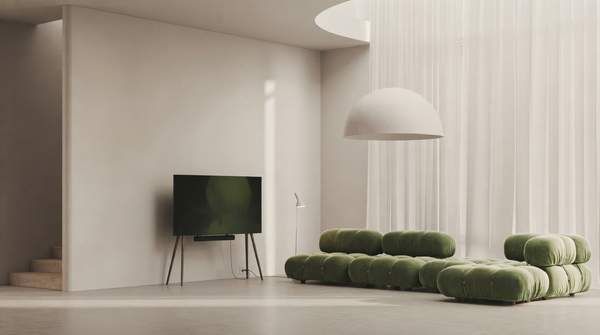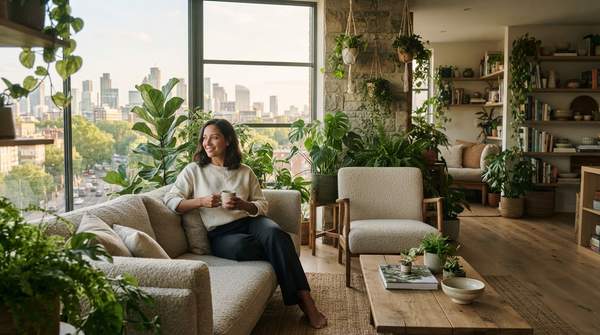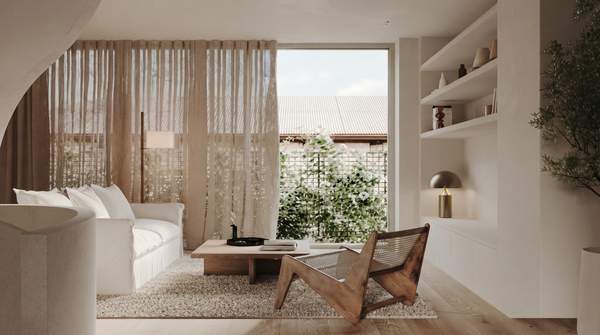
Japandi is a hybrid interior style that fuses Japanese minimalism with Scandinavian functionality, producing rooms that are simple, intentional, and calming without ever feeling cold. The name itself signals the pairing: "Japa" for Japan, "ndi" for Scandinavia. What makes the style more than a trend label is that both traditions, despite coming from very different cultures, share the same core design principles — simplicity, functionality, and a deep respect for natural elements, as homebuilder SHAWOOD's design writer Rachel Sewell explains. The result is a space that feels structured and inviting at once.
Understanding Japandi: A Fusion of East and West
At its most basic, Japandi is about balance. Scandinavian design contributes light, airy spaces, light woods, soft textiles, and cozy details. Japanese interiors lean the other way: darker tones, minimal styling, organic shapes, and a grounded feel. Japandi, as the Scandinavian retailer Nordic Nest describes it, is "a balance of both — neutral colours, clean lines and a mix of light and dark materials."
That balance is what distinguishes Japandi from either parent style on its own. Where a purely Scandinavian room tends to feel bright and breezy, and a purely Japanese room can feel austere, the hybrid deliberately mixes the two registers. Writing for Grain & Frame, Samuel Moseley notes that despite Japan and Scandinavia being completely different cultures, both share the same underlying values, which is precisely why the fusion works rather than clashing.
The architecture practice Joya Architects adds a useful nuance: while Scandinavian interiors often appear bright and airy, Japandi interiors typically feel slightly more grounded and contemplative. That shift in mood comes from the Japanese side of the pairing, and it shows up in concrete choices — deeper wood tones, handcrafted materials, earthy neutral colors, and restrained furniture arrangements.
The Philosophical Roots: Wabi-Sabi Meets Hygge
Two philosophies anchor the style, and understanding them explains why Japandi rooms look the way they do. On the Japanese side is wabi-sabi, a tradition with roots going back centuries that, as Sewell puts it, values imperfection and transience. Joya Architects describes it as the appreciation of natural materials, simplicity, and subtle imperfections — the reason a matte ceramic with a visible thumbprint of the maker's hand, or a timber surface with pronounced grain, reads as beautiful rather than flawed in a Japandi room.
On the Scandinavian side is hygge. Denmark's official culture portal defines it as "taking time away from the daily rush to be together with people you care about — or even by yourself — to relax and enjoy life's quieter pleasures." The word in its modern sense dates to around 1800, though related Old Norse meanings — "protected from the outside world" — trace back to the Middle Ages. The Oxford English Dictionary, cited by Sarah Buder writing for AFAR, defines hygge as "a quality of coziness and comfortable conviviality that engenders a feeling of contentment or well-being."
Japandi is what happens when these two worldviews share a room. Wabi-sabi supplies the serenity, the acceptance of natural texture, and the comfort with empty space; hygge supplies the warmth, the softness, and the insistence that a home should serve the people living in it. Nordic Nest captures the synthesis neatly: Japandi brings these philosophies together, resulting in spaces that feel warm, minimal, and effortlessly refined.
Japandi Design Deconstructed: A Fusion Table
The clearest way to see how the style works is to separate each design element into its Japanese contribution, its Scandinavian contribution, and the hybrid result. The table below synthesizes the descriptions offered by Nordic Nest, Joya Architects, and Grain & Frame. Read a row left to right and you can trace exactly how a single Japandi choice — say, a dark oak table against pale walls — inherits something from each tradition.
| Design Element | Japanese Influence | Scandinavian Influence | Japandi Result |
|---|---|---|---|
| Color palette | Darker, muted tones; a grounded feel | Light neutrals with gentle color and warm accents | Earthy neutrals with considered dark or muted accents — balanced, calming, sophisticated |
| Materials | Visible grain, matte surfaces, tactile ceramics, handcrafted natural materials | Light timber, woven materials, comfortable textiles | A deliberate mix of light and dark natural materials, emphasizing craftsmanship and sustainability |
| Furniture | Minimal styling, organic shapes, simple silhouettes, low profiles | Practical, comfortable pieces with a light visual presence | Clean, functional lines; fewer focal pieces chosen for quality over quantity |
| Styling and decor | Restrained displays and deliberate empty space | Soft layers such as cushions, rugs, and throws | Minimalism with warmth — clutter-free but never cold |
| Underlying philosophy | Wabi-sabi: appreciation of imperfection, transience, and natural cycles | Hygge: coziness, comfort, and convivial well-being | Serene, contemplative spaces that are still inviting and lived-in |
The table also serves as a diagnostic tool when you are shopping or rearranging. If a room feels too stark, the Scandinavian column tells you what to add — soft textiles, lighter woods, warm accents. If it feels too busy, the Japanese column tells you what to subtract — excess decor, competing focal pieces, anything that fills space without purpose.
Actionable Principles for Achieving the Japandi Look
Translating the philosophy into practice comes down to a handful of principles that recur across design guides. The first is intentional minimalism. Grain & Frame's guidance is to use a minimalist design with simple, clean lines, and Sewell frames the goal as a calm, organized environment free from clutter, where every piece has a purpose. In practice, that means editing a room down until what remains is either functional or genuinely loved — ideally both.
The second principle is natural, sustainable materials. Both traditions share a strong connection to the environment, which is why timber, stone, ceramics, and woven fibers dominate the palette. Grain & Frame extends this into a buying philosophy: resist fast, disposable purchases in favor of fewer, higher-quality items that last longer and can be passed down. This is where wabi-sabi's respect for natural materials meets a very practical Scandinavian concern for longevity.
Third, prioritize craftsmanship and statement pieces. Japandi is about combining the functional with the beautiful, so a single well-made piece — a low-profile chair, a hand-finished table — can carry a room, provided the surrounding space stays quiet. Emilceramica's design guide lists the key characteristics as minimalism, natural materials, a neutral and warm color palette, clean functional lines, high craftsmanship, a discreet connection with nature, and the intentional use of negative space.
Finally, bring nature indoors and let light work for you. Plants are a natural accessory in both traditions, adding green contrast to neutral tones. Natural light is the preferred lighting source, and pale, neutral tones on walls, floors, and furniture help it circulate — though the amount of light a space can capture depends on its design and windows, as Grain & Frame cautions.
Embracing Japandi: Creating Your Serene Space
To achieve a Japandi aesthetic, prioritize intentional minimalism, natural materials, and quality craftsmanship, blending the serene simplicity of Japanese design with the cozy functionality of Scandinavian style. The advice here is general and adaptable rather than prescriptive — it concerns principles, not specific room layouts, budgets, or products, and it is not architectural guidance.
You will know the approach is working by a measurable indicator: a living space characterized by uncluttered surfaces, a harmonious blend of light and dark natural textures, and a calm, inviting atmosphere that promotes well-being. If a surface is cluttered, a palette has drifted all-light or all-dark, or a room feels cold rather than contemplative, the fusion table above tells you which tradition to draw from next.
Sources
- What is Japandi Style: How to Get the Look — SHAWOOD
- Japandi Style – Scandinavian meets Japanese interior design — Nordicnest
- Japandi Design - A Detailed Guide — Grain & Frame
- Japandi vs Scandinavian Design: Differences & How to Choose — Joya Architects
- Danish hygge — Denmark
- Hygge: The Danish Concept of Comfort We Need Now More Than Ever — AFAR Media
- Japandi Style interior design: ideas, rules & tile guide — Emilceramica