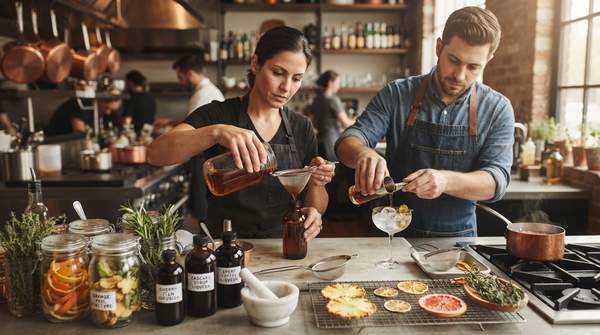
The most interesting zero-waste work happening in professional kitchens and bars today is not about composting—it is about flavor. Chefs are dehydrating peels into spice mixes, steeping leftover herbs into teas, and repurposing stale bread into menu innovation, while bartenders are building entire cocktails around ingredients that would otherwise be discarded. The through-line is a single idea: every part of an ingredient carries taste worth extracting, and the techniques for capturing it are surprisingly accessible to the home cook.
The Art of Zero-Waste: Beyond Basic Scraps
Zero-waste cooking, as the Auguste Escoffier School of Culinary Arts frames it, means using all parts of the ingredients you cook with—and that requirement pushes chefs to "get creative and think outside of the box." The school's own examples range from the familiar (bones and vegetable scraps simmered into broth) to the unexpected: leftover coffee grounds used to flavor handmade ice cream for dessert.
What separates the advanced practitioner from the home cook simply saving onion ends is intent. Food writer Kristen Link describes the mindset as nose-to-tail, root-to-stem cooking, pointing to cookbooks like the James Beard Foundation's "Waste Not" and Abra Berens's "Ruffage" as sources of inspiration. The professional version of this philosophy also has a business case: a hospitality procurement guide aimed at hotel operators notes that simple techniques—freezing scraps, repurposing stale bread, preserving vegetables, using stems and skins—reduce costs while enhancing flavor and menu innovation, and that lower ingredient loss helps operations absorb inflationary pressure.