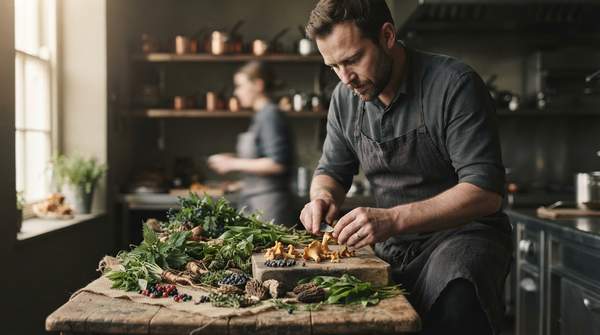
The use of foraged ingredients in gourmet cuisine has become increasingly mainstream, offering chefs a way to create unique, hyperlocal dishes that tell a story of time and place. However, this trend carries significant responsibility. Sourcing from the wild requires a rigorous ethical framework to ensure safety, ecological sustainability, and respect for the land. Without a systematic approach, even well-intentioned chefs risk damaging delicate ecosystems, a cautionary tale highlighted by Patricia Kyritsi Howell of the Botanologos School of Herbal Studies, who recalled a chef’s team clearing whole areas of plants in the Appalachians.
For culinary professionals, moving beyond the "glamour shots of full baskets" often seen on social media is essential. Ethical foraging is not simply about taking; it is a practice rooted in deep knowledge, observation, and reciprocity. This guide provides a structured decision framework for chefs to evaluate and source wild ingredients, ensuring every foraged element on the plate is a product of mindful and sustainable practice.
The Ethical Foraging Decision Framework for Gourmet Chefs
Before any wild ingredient is considered for a menu, it must pass through a multi-stage evaluation. This framework organizes the decision-making process into three critical areas: positive identification and safety, ecological impact and sustainability, and legal and social responsibilities. Each step involves key questions and actions that must be satisfied before a chef can ethically decide to harvest or purchase a foraged product. This process protects the environment, the diner, and the restaurant's integrity.
Step 1: Positive Identification and Safety First
The foundational rule of foraging is absolute certainty in identification. There is no room for error when dealing with wild plants, as many edible species have toxic lookalikes. Chefs must be able to identify a plant with 100% confidence before it is ever harvested. This requires using multiple resources, such as regional field guides that provide detailed images and descriptions, and confirming new finds with an experienced forager or naturalist.
Safety extends to the harvesting location. Plants growing near roadsides or railroad beds should almost always be avoided. According to Wildfoods 4 Wildlife, car exhaust can coat plants with heavy metals and toxins up to 30 to 50 feet away, and these residues may not wash off completely. Similarly, areas subject to chemical applications, like some agricultural fields or rights-of-way, are unsuitable for sourcing ingredients. A forager must know which parts of a plant are safe to consume and at what time of year, ensuring every harvest is free from both inherent toxicity and environmental contamination.
Step 2: Assessing Ecological Impact and Sustainability
Ethical foraging is fundamentally about ensuring that wild plant populations remain healthy and abundant for future generations and for the wildlife that depends on them. Before picking anything, a chef or forager must first observe and assess the environment. The principle is to take only a tiny fraction from areas of abundance. If a plant is not plentiful in a given area, it should not be harvested at all.
Sustainable harvesting techniques are specific to each plant. Forager Fern Freud advises learning about a plant's unique growing pattern to pick in a way that avoids damaging its ability to reproduce. This might mean leaving part of a root in the ground so it can regrow or harvesting only a small portion of leaves from any single plant. A common guideline is to take only what is needed and never more than one-tenth to one-third of a large, thriving patch, leaving plenty for natural regeneration and for other animals to eat. This approach ensures that foraging supports biodiversity rather than diminishing it.
Step 3: Navigating Legal and Social Responsibilities
Understanding the legal and social landscape is as crucial as identifying the plants themselves. Foraging is governed by local laws and regulations that dictate what can be harvested, how much, and from where. It is the chef's responsibility to know these rules and to secure permission before entering private land. This step prevents legal trouble and demonstrates respect for property owners and land managers.
Beyond legal compliance, ethical foraging requires deep respect for the cultural context of wild foods. As Catawba Nation food sovereignty educator Linda Black Elk explains, foraging is rooted in Indigenous culture and is centered on balance, reciprocity, and a relationship with the land. Chefs incorporating wild foods should seek to understand and honor these traditions, acknowledging that these are not just trendy ingredients but are part of long-standing foodways. This involves giving back to the land and the community, ensuring the practice is regenerative rather than extractive.