Universal Design for Inclusive Cultural Experiences & Community Engagement

After five decades, Fort Wayne's Arts United Center has finally begun its first major renovations, a monumental undertaking to dismantle long-standing accessibility barriers and modernize outdated tec

CR
Camila Roque

April 15, 2026 · 5 min read

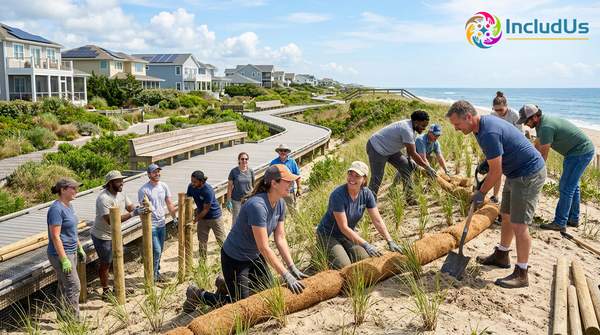
Diverse individuals of all ages and abilities enjoying an inclusive and accessible cultural center, showcasing universal design principles in action.

After five decades, Fort Wayne's Arts United Center has finally begun its first major renovations, a monumental undertaking to dismantle long-standing accessibility barriers and modernize outdated technology. This long-awaited overhaul will transform crucial infrastructure, unlocking decades of limited public access and enriching cultural experiences for all. The project confronts a half-century of deferred maintenance, marking a pivotal moment for the institution's future.

Cultural institutions worldwide acknowledge the importance of inclusive design, but it often remains an afterthought, leading to costly retrofits and missed opportunities for community engagement. This reactive approach exposes a stark tension between declared values and practical implementation, ensnaring many in a cycle of expensive, piecemeal solutions.

The growing recognition of universal design's profound benefits, coupled with an escalating demand for true accessibility, positions cultural institutions at a crossroads. Those that proactively weave these principles into their fabric will likely unlock deeper community engagement and enduring success, while those that hesitate risk increasing pressure and eventual exclusion. True, sustainable inclusion demands this foresight, not just a reactive response.

The Arts United Center's 50-year delay in addressing accessibility, as reported by Input Fort Wayne, serves as a stark testament to the profound financial and social costs of neglecting inclusive design. This half-century of inaction has not only limited access but has also accumulated a mountain of deferred maintenance. In vivid contrast, Fort Wayne's Promenade Park on the Riverfront, lauded with a 2021 Urban Land Institute (ULI) Americas Awards for Excellence, showcases the triumph of universal design, according to Input Fort Wayne. This award-winning space, conceived with accessibility at its core, proves that proactive planning yields not just inclusivity, but recognition. Further amplifying this demand, Visit Fort Wayne's 10-year plan, born from public feedback prioritizing accessibility, underscores a city-wide commitment to universal access, as noted by Input Fort Wayne. These contrasting Fort Wayne narratives—one of belated repair, the other of celebrated foresight—reveal a critical truth: cultural institutions worldwide, often treating inclusive design as an afterthought (pmc.ncbi.nlm.nih.gov), are not merely failing diverse audiences but actively incurring significant, avoidable financial burdens.

What is Universal Design?

Universal design principles forge a robust framework, guiding federal agencies to elevate accessibility across digital strategy, procurement, and product design, according to Section508. At its heart, this approach crafts environments and products inherently usable by all, eliminating the need for costly adaptations or specialized designs. Mason Metzger, founder of Universal Design Works, exemplifies this by consulting with institutions like the Fort Wayne Children's Zoo and Parkview Health, meticulously integrating universal design into physical spaces, as reported by Input Fort Wayne. These consultations sculpt spaces with diverse user needs at their core, far surpassing mere compliance. Crucially, usability testing (UT), involving representative users including those with disabilities, provides invaluable data, ensuring designs are truly inclusive, according to Section508. The true power of universal design lies not just in its broad applicability—from digital realms to physical structures—but in its insistence on genuine, user-centric testing, transforming accessibility from a checklist item into an intrinsic quality.

Navigating Nuance: Universal vs. Specific

Culture-specific adaptations of services, according to pubmed.ncbi.nlm.nih.gov, prove significantly more effective for specific communities than a broad standard of care. Tailored approaches, this finding reveals, can unlock deeper engagement for niche groups, precisely addressing unique cultural contexts and needs. Herein lies a fundamental conflict: while such specificity fosters profound connections, it simultaneously diminishes the generalizability of findings and the scalability of interventions, as also noted by pubmed.ncbi.nlm.nih.gov. Institutions face a delicate tightrope walk: balancing the intense, bespoke engagement of culturally specific adaptations with the expansive, far-reaching inclusivity offered by universal design. Pursuing only the former risks creating a fragmented, unsustainable landscape of accessibility, ultimately limiting broader societal inclusion and leaving many on the periphery.

Implementing Universal Design for Community Engagement

The triumph of universally designed spaces like Fort Wayne's Promenade Park, celebrated with awards, proves that proactive, integrated universal design is not merely an ideal, but a potent, practical strategy cultural institutions must embrace, according to Input Fort Wayne. This approach deftly sidesteps the pitfalls of costly, piecemeal accessibility solutions, instead forging spaces that welcome a wider public from their very inception. Crucially, the palpable public demand for accessibility, evidenced by Visit Fort Wayne's ambitious 10-year plan and the ready availability of universal design consultants, exposes the true barrier to inclusive cultural experiences: not a scarcity of tools or desire, but a systemic institutional inertia. Universal design, as vividly demonstrated by successful public spaces, offers a scalable, effective pathway to inclusion, addressing broad public demand and challenging the notion that solutions are elusive.

The Cost of Inaction: Why Universal Design is Imperative

Inclusive design for cultural services remains a global afterthought, according to pmc.ncbi.nlm.nih.gov. This pervasive trend endures despite the clear recognition that universal design principles empower federal agencies to enhance accessibility across digital strategy and product design, as noted by Section508. This stark contrast reveals a profound disconnect: while universal design's efficacy is proven and even mandated in some sectors, cultural institutions worldwide lag conspicuously. This suggests not merely oversight, but a unique resistance within the cultural sphere to embrace these transformative strategies. This global tendency to relegate inclusive design to an afterthought demands urgent action, compelling cultural institutions to actively engage diverse user groups and systematically dismantle every existing barrier to participation.

How can cultural organizations improve accessibility?

Cultural organizations can improve accessibility by integrating universal design principles from the initial conceptualization phase of any project, rather than relying on reactive retrofits. This involves consulting certified accessibility specialists and conducting inclusive usability testing with diverse user groups, ensuring that new designs inherently accommodate a wider range of abilities and needs from day one.

What are the benefits of inclusive cultural programming?

Inclusive cultural programming expands audience reach and fosters a more representative cultural identity for a community. Beyond increased attendance, it can also attract grant funding specifically allocated for diversity and inclusion initiatives, enhancing an institution's financial stability and public image.

Strategies for engaging diverse communities in cultural events?

Effective strategies for engaging diverse communities include establishing advisory boards with representatives from various disability and cultural groups to co-design programs, ensuring relevance and authenticity. Additionally, providing communication in multiple accessible formats, such as Braille guides, ASL interpreters, and plain language summaries, can significantly broaden participation.

By Q4 2026, cultural institutions that, like Fort Wayne's Arts United Center with its half-century delay, have not fully integrated universal design principles will likely face escalating public scrutiny and significant financial strain from belated, mandatory retrofits, while proactive adoption promises not just compliance, but a vibrant, engaged future.