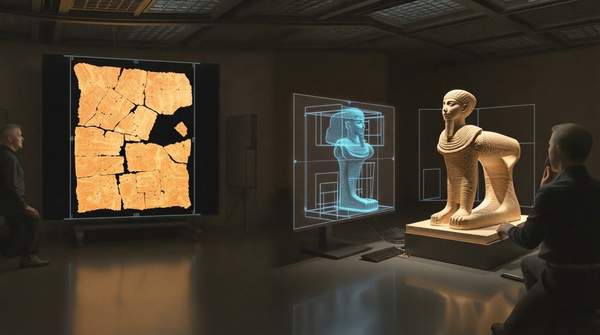
The Palace Museum's Digital Relics Repository now openly shares images of 100,000 cultural relics. This monumental feat, while celebrated, belies the inherent fragility of digital data. The expansive project allows global audiences to access artifacts once hidden behind museum walls, offering a vivid glimpse into China's rich historical tapestry. The sheer volume of digitized items seems to declare a triumph in digital age cultural heritage preservation, seemingly overcoming time and decay.
Digitalization promises eternal access to cultural heritage, yet without continuous, active intervention, these digital assets are more vulnerable to decay and obsolescence than their physical counterparts. The public often perceives digital preservation as an act of eternal safeguarding, a 'set it and forget it' solution that, once completed, secures an artifact forever.
As digital cultural heritage grows exponentially, institutions that fail to adopt comprehensive, systematic preservation strategies risk losing invaluable parts of human history, trading perceived permanence for actual impermanence.
The Digital Paradox: Fragile Permanence
Digital cultural heritage, despite its perceived permanence, is inherently fragile. It requires continuous, resource-intensive processes to counteract decay and obsolescence. The public's belief in digital preservation as a one-time solution is dangerously misguided; digital permanence is a perpetual operational expense, not a fixed investment, according to the Digital Preservation Coalition.
Maintaining systematic processes like monitoring and refreshing storage media, replicating files, and generating or recalculating checksums are fundamental for long-term digital preservation. These ongoing tasks prevent data corruption and ensure digital files remain accessible as technology evolves. Without such diligence, even a perfectly digitized relic faces an inevitable digital decay.
Digital assets demand constant vigilance, often exceeding the care given to their physical counterparts. Bits and bytes are not immune to the passage of time or the rapid pace of technological change, requiring proactive and sustained commitment from institutions.

Building Digital Arks: Systematic Preservation in Action
Effective digital preservation is a multi-faceted, active endeavor, integrating advanced technology with comprehensive lifecycle management to ensure data integrity and accessibility. The Palace Museum Digital Relics Repository, for instance, employs a sophisticated technological system. This system encompasses high-precision data collection, knowledge graph organization, and intelligent management, according to Nature. Their 'collection-storage-utilization-dissemination' digitalization model goes beyond simple scanning; it outlines a continuous chain of processes essential for managing an asset throughout its entire digital lifespan.
Institutions embracing large-scale digitalization, like the Palace Museum's repository (nature.com), are unwittingly committing to an endless technological arms race against obsolescence. This battle, without sustained funding and skills, will inevitably lead to the loss of 'permanently preserved' digital assets. The initial investment is only the beginning of a long-term financial and technical commitment.
Beyond the Bytes: Complexities and Cultural Divides
Beyond technical obsolescence, preserving the authentic experience of interactive digital heritage and navigating resource constraints present significant, often overlooked, challenges. Digitalization of cultural heritage faces difficulties including cost, lack of skills, sustainability, and intellectual property limitations, according to knowledge graph-driven digital preservation of intangible cultural heritage: a cross-cultural comparative study of chinese and western implementation paradigms. This is particularly evident for complex digital materials like games and digital artwork, where preservation must attempt to replicate the original user experience.
This requirement goes beyond simply saving the data; it demands recreating the interactive environment and software dependencies. D-Lib Magazine emphasizes this intricate effort, crucial for maintaining the original intent and functionality of such works. This ambitious goal places a substantial burden on institutions, requiring specialized expertise and continuous technological upgrades to avoid a mere 'bit-level' preservation that loses the essence of the original experience.
New Frontiers: Immersive Preservation
Emerging immersive technologies like the metaverse provide novel opportunities to engage audiences and create dynamic, accessible forms of cultural heritage preservation. Metaverse applications offer innovative ways to preserve and promote cultural and heritage sites by enabling immersive experiences, according to nature.com. These platforms can transport users to historical sites, allowing them to explore and interact with digital reconstructions in unprecedented ways.
These immersive environments promise a rich, interactive connection to the past, moving beyond static images or texts. Imagine walking through a digitally reconstructed ancient city or handling a virtual artifact, experiencing its textures and details as if it were real. Such applications could significantly broaden public access and engagement with cultural heritage.
However, while metaverse applications promise innovative immersive experiences for cultural heritage (nature.com), they simultaneously introduce new layers of technological dependency and fragility. This could potentially divert resources from fundamental, ongoing bit-level preservation efforts towards ephemeral, high-tech displays. Institutions must carefully balance the allure of new technologies with the foundational need for robust, long-term data integrity.
Is Digital Forever? The Basics of Bit-Level Preservation
What are the best practices for digital cultural heritage documentation?
Best practices for digital cultural heritage documentation extend beyond simple file storage. They involve comprehensive metadata creation, detailing the origin, context, and technical specifications of each digital asset. This ensures future researchers understand the material. It also includes strategies for format migration and emulation to combat obsolescence, maintaining both data integrity and accessibility.
What is bit-level preservation?
Bit-level preservation focuses on maintaining the exact sequence of bits that constitute a digital file, ensuring the data's integrity even if the original software or hardware to interpret it becomes obsolete. This foundational step is often employed when a file cannot be migrated to a more future-proof format, according to siarchives. It acts as a baseline safeguard, preventing information loss at its most fundamental level.
How does obsolescence impact digital heritage?
Obsolescence affects digital heritage through media decay, format incompatibility, and software dependency. Storage media can degrade over time, file formats can become unreadable by modern applications, and the software required to interpret complex digital objects may no longer be available. This constant technological evolution necessitates continuous migration and emulation strategies to keep digital assets usable and understandable.
The Future of Our Past: A Global Endeavor
The future of digital cultural heritage will be shaped by diverse global philosophies, requiring international dialogue to balance universal access with national priorities and narrative control. Western intangible cultural heritage (ICH) digitalization often foregrounds civic participation and digital commons, according to nature.com. In contrast, China integrates digitalization into cultural policy, national identity construction, and narrative control.
These differing approaches reveal a complex interplay between technology, culture, and national interests in the realm of digital preservation. While the technical challenges of digital fragility are universal, the societal goals and governance frameworks guiding preservation efforts vary significantly. Collaborative international standards and shared best practices become critical to ensure a truly accessible global heritage.
By 2026, the continued viability of repositories like the Palace Museum's 100,000 digital relics will depend on sustained investment in the complex, labor-intensive processes of refreshing and replicating data. This commitment must evolve beyond the initial digitalization effort, determining which parts of human history endure in the digital age.