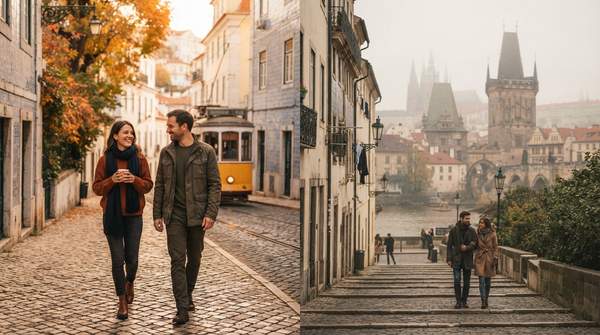
Slow travel in a city comes down to two questions you can ask of every booking, ride, and reservation: does this choice deepen your connection to the place, and does it lighten your footprint? The philosophy is easy to state; the planning is where it either happens or dissolves. This guide translates slow travel's core principles into a working decision framework, so you can compare options for transportation, accommodation, and activities against cultural immersion and environmental impact, and build an itinerary that reflects those priorities rather than speed and convenience alone.
Understanding Slow Travel: Beyond the Tourist Checklist
Slow travel is defined less by pace than by intention. Writing for Casa di Langa, Ciro Lieto describes it as discovering "hidden corners, quiet villages, and off-the-beaten-path views, places that reveal their beauty only to those who know how to slow down their pace and observe carefully." The contrast with conventional tourism is structural: conventional trips accumulate sights, while slow trips accumulate understanding.
The mindset shift matters most in cities, where the pressure to see everything is strongest. Lieto notes that "without haste or anxiety to see everything quickly, travelers can truly regenerate and calmly live every single moment of their experience." An extended stay, he argues, allows participation in "traditional events, popular festivals, and daily community activities, thus transforming the traveler into a local inhabitant."
Crucially, slow travel is not under-planning. A guide from Northern Spain Travel puts it plainly: "You don't need less planning. You need better planning, with enough restraint to let the destination breathe." The clearest benchmark, it suggests, is time—staying "long enough for a destination to stop performing for you and start revealing itself."
The Pillars of Urban Slow Travel
Three pillars carry the philosophy into an urban context. The first is cultural immersion: preferring encounters with local culture and authentic traditions over curated tourist experiences. The second is environmental consciousness. Lieto frames this as a direct consequence of pace: "Moving slowly and preferring low-impact means such as the train, bicycle, or even simply walking, means deeply respecting the visited territory."
The third pillar is local engagement through consumption and presence—savoring local foods, joining community activities, and letting the destination's daily rhythm become yours. Ecobnb's Francesco Rochira adds a spatial dimension: exploring the back roads rather than the obvious routes, which in a city means neighborhood streets over the corridor between major attractions.
These pillars become decision criteria. When you compare two options, ask which one offers more genuine contact with local life, and which one demands fewer resources. That comparison, repeated across your itinerary, is the entire method.