The core rules of ethical wildlife viewing are simple and consistent across the agencies that manage wild animals: keep your distance, never feed or bait, avoid all physical contact, protect the habitat you walk through, and choose operators who do the same. If you can hold a planned wildlife experience up against those five criteria, you can judge its ethics for yourself—no certification required. This guide turns the published guidance of the National Oceanic and Atmospheric Administration, the National Park Service, the U.S. Fish and Wildlife Service, the Washington Department of Fish and Wildlife, and several conservation organizations into a working checklist you can apply before you book or step outside.
Why Ethical Wildlife Viewing Matters
A wild animal's survival depends on staying wild. The National Park Service puts the stakes plainly: a park is "a place to let wildlife be wild," and the animals you see are not pets or cared for by staff. Your safety and theirs, the agency says, depends on good judgment and following safe viewing guidelines. That framing matters because the temptation to close the distance for a photo is real, and there is not always a sign to stop you.
Government wildlife managers converge on the same principle from different angles. NOAA's Office of National Marine Sanctuaries asks viewers to give wildlife plenty of space, be aware of local regulations, and use a zoom lens or binoculars for the close-up view—for the animal's safety as well as yours. Washington's Department of Fish and Wildlife adds that harassment itself can cross a legal line: harassing certain species can be a crime, and the agency urges viewers never to force animals to flee by throwing objects or making noise.
Conservation groups extend the duty beyond the moment of encounter. A code of conduct proposed by Faunalytics frames the goal as sustainable tourism that conserves local habitat and minimizes effects on wildlife, and the Oceanic Society describes its own tours as non-invasive by design. The through-line is that ethical viewing is not a constraint on the experience—it is what makes genuine natural behavior visible at all.
The Hidden Costs: How Your Actions Impact Wildlife
Each rule in the checklist exists because a specific harm has been documented. Feeding is the clearest example. NOAA warns that animals can become too accustomed to humans, which can cause sickness and even death. Washington's wildlife department makes the same connection, and Faunalytics' proposed code states the mechanism: feeding and physical interaction "reduce opportunities" only when avoided—allowing them increases habituation, the process by which wild animals lose their natural wariness of people.
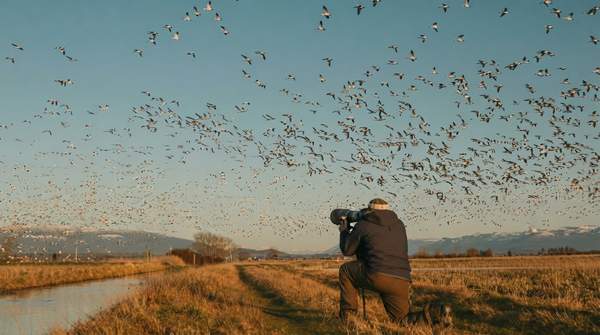
Crowding carries its own cost. The U.S. Fish and Wildlife Service has described how inexpensive digital cameras and social media sharing have spurred a boom in wildlife photography, leading to crowds pressing into refuges, overrunning parks and preserves, trampling habitat, and threatening the very species being photographed. Washington's agency notes the same mechanism on the ground: some species are ground nesters or burrowers, so heavy trampling through flowers, shrubs, grasses, water, and tidepools damages habitat in ways that affect the entire ecosystem.
Physical contact multiplies the risks. NOAA cautions that attempting to touch, handle, or ride wildlife can injure the animal and put you at risk, and is illegal for many species. The International Fund for Animal Welfare goes further, advising travelers not to visit places offering physical contact with captive wild animals, because too much direct contact with humans is damaging to them and such tourist activities are usually exploitative. World Animal Protection adds the underlying rationale: animals are sentient beings able to experience pain, fear, and suffering.
Even well-intentioned closeness changes what an animal does. The Oceanic Society observes that animals overtly respond to intrusive human behavior with defensive-aggressive posturing, vocalization, or flight—energy spent on you instead of feeding, resting, or raising young.
Your Ethical Wildlife Viewing Checklist
Use the table below to evaluate any wildlife viewing opportunity—guided or self-guided—before and during the experience. Each row pairs an ethical principle with the guideline to follow, the harm you avoid by following it, and where the guidance comes from.
| Ethical principle | Guideline to follow | Harm avoided | Guidance source |
|---|---|---|---|
| Maintain safe distance | Give animals room to move; use binoculars or a zoom lens; if an animal reacts to your presence, you are too close. Many U.S. parks require at least 25 yards from most wildlife and 100 yards from predators like bears and wolves, but distances vary by park—check locally. | Stress, defensive or aggressive behavior, flight, and injury risk to both animal and viewer. | National Park Service; NOAA; Washington Department of Fish & Wildlife |
| No feeding or baiting | Never offer food to wild animals, and avoid operators that feed or bait wildlife to attract them. | Sickness, dependency, habituation, and even death, as NOAA and Washington's wildlife agency warn. | NOAA; Washington Department of Fish & Wildlife; Faunalytics |
| No physical contact | Do not touch, handle, or ride wildlife; move back if wildlife approach you. | Injury to the animal, risk to you, disease transmission, and exploitation of captive animals. | NOAA; International Fund for Animal Welfare; National Park Service |
| Protect habitat | Stay on designated paths, pick up trash and pet waste, avoid trampling vegetation, water, and tidepools, and respect area closures during vulnerable periods such as birthing or mating. | Habitat degradation affecting all species in the ecosystem, including ground nesters and burrowers. | Washington Department of Fish & Wildlife; U.S. Fish and Wildlife Service; Faunalytics |
| Operator's stated ethics | Ask whether the operator enforces distances, prohibits feeding and contact, and educates guests; NOAA advises choosing tour operators who follow these principles. | Operators who break the rules normalize harmful behavior for every guest who watches them. | NOAA; Faunalytics; Oceanic Society |
| Compliance with local regulations | Know the viewing rules and any time limits or zones governing visits before you go, and accept unexpected restrictions with good grace. | Regulations exist for the protection of the animals, the ecosystem, and you. | Faunalytics; Washington Department of Fish & Wildlife; NOAA |
The distance row deserves special attention because it is the one most often fumbled in the moment. The National Park Service's rule of thumb is behavioral rather than numeric: if an animal reacts to your presence, you are too close—and if you are close enough for a selfie, you are definitely too close. Washington's wildlife department offers a practical field test, the "rule of thumb": hold up your thumb in a hitchhiker fashion, and if the animal is not fully hidden behind it, back up.
Choosing a Responsible Tour Operator
NOAA's guidance is direct: choose tour operators who follow the same principles you would follow yourself. That gives you a concrete vetting script. Before booking, ask whether the operator maintains minimum distances from wildlife, whether it has a strict no-feeding and no-baiting policy, whether any part of the experience involves touching, handling, or riding animals, and how guides respond when an animal approaches the group. An operator who cannot answer those questions clearly, or who advertises close interaction as a selling point, is telling you what you need to know.
Look for evidence that ethics are built into the operation rather than bolted on. The Oceanic Society describes its tours as non-invasive by design, with naturalist leadership intended to enhance encounters while minimizing impact—commitments an operator should be willing to state publicly. Faunalytics' proposed code of conduct offers a template for exactly this: a written standard covering habitat conservation, reduced environmental impact, and keeping wild animals wild by not feeding or physically interacting with them. Ask whether the company has anything similar, and whether guides brief guests on it before an encounter.
Be alert to restrictions as a positive signal. Faunalytics notes that time limits and zones governing tourist visits exist for the protection of the animals, the ecosystem, and possibly you. An operator that treats closures and seasonal restrictions—such as those protecting animals during birthing or mating—as inconveniences to be worked around is failing the checklist, however enthusiastic its marketing.
Self-Guided Adventures: Being Your Own Ethical Guide
Without a guide, the responsibility collapses onto you, and the same criteria apply with no one else to enforce them. Start with distance: check the specific rules for the place you are visiting, because they vary—the National Park Service notes many parks require 25 yards from most wildlife and 100 yards from predators, while Olympic National Park requires 50 yards. Then hold yourself to the behavioral test: any reaction from the animal means you are too close.
Protect the ground you walk on. Washington's wildlife department asks viewers to be clean—picking up trash and pet waste—and to tread softly, avoiding heavy trampling through flowers, shrubs, grasses, water, and tidepools, because damage to habitat affects every species in the ecosystem. The Fish and Wildlife Service's account of photography crowds overrunning refuges shows how quickly individual footsteps add up.
Finally, model the behavior you want to see. NOAA encourages responsible viewers to lead by example, because practicing ethical viewing encourages others to do the same—and Washington's agency adds that learning about the species you watch deepens both your appreciation and your ability to read their behavior. Patience, not proximity, is what rewards the ethical viewer: the natural behaviors that make wildlife worth watching appear only when animals are left alone to perform them.
Making Responsible Choices: A Commitment to Wildlife
Commit to evaluating all wildlife viewing opportunities using ethical guidelines to ensure minimal impact and promote animal welfare. The checklist above works for any encounter, anywhere: distance, no feeding, no contact, habitat protection, operator ethics, and local rules. This article does not provide legal advice on wildlife protection laws, which vary by location, and it does not recommend specific operators—the point is that you should not need either if you can run the evaluation yourself.
You will know your choices are working by what you see: animals in the viewing area exhibit natural, undisturbed behavior, and guides or operators consistently enforce safe distances and non-interference. If an animal changes its behavior because of you, or a guide closes distance for a better photo, the experience has failed the test—regardless of how memorable it felt. The measure of ethical wildlife viewing is an animal that never knew you made an effort to be there.
Sources
- Wildlife Viewing Guidelines: Recreate Responsibly — Sanctuaries
- I Didn't Know That!: Leave No Trace Principle #6 - Respect Wildlife (U.S. National Park Service) — NPS
- Ethics & Wildlife Photography — FWS.gov
- Ethical wildlife viewing — Washington Department of Fish & Wildlife
- A Suggested Code Of Conduct For Wildlife Tourists - Faunalytics
- Ecotourism Code of Ethics - Oceanic Society
- Responsible Travel Do’s And Don'ts — IFAW