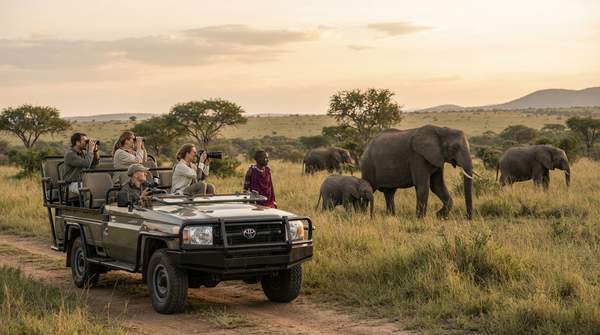
The fastest way to spot an ethical wildlife tour operator is to look at what the animals are doing. If they're performing, giving rides, posing for selfies, or guaranteed to appear on schedule, walk away. If they're behaving wild—observed from a distance by a trained naturalist, on a tour that works around breeding seasons and funds local conservation—you've likely found a promising operator. Conservation groups converge on a handful of concrete markers that separate genuine responsibility from marketing, and you can check most of them before you ever pay a deposit.
Understanding Responsible Wildlife Tourism
Responsible wildlife tourism means travel that accounts for its social, economic, and environmental effects. As the International Fund for Animal Welfare frames it, responsible travel is about understanding the potential impact of your actions on local communities, wildlife, and ecosystems "to make sure it is positive." Not every opportunity to see wildlife meets that bar—some popular tourist attractions can do more harm than good, which is why research before booking matters more than good intentions at the gate.
The distinction often hides behind language. The Sloth Conservation Foundation, which publishes guidance on choosing ethical wildlife tours, notes that responsible operators support conservation organizations, employ local people, and contribute to habitat restoration—so your booking helps protect the very animals you've come to see. Road Scholar, an educational travel organization, adds a community dimension: well-run wildlife tourism can fund schools, support clinics serving both rangers and local families, and open markets for local crafts, foods, and services. The label "sustainable" or "ethical" on a website proves nothing by itself; the practices underneath it are what count.
Red Flags: Practices to Avoid
Certain practices are reliable warning signs regardless of how the tour is marketed. National Geographic's guidance on responsible wildlife tourism is blunt: being chained, performing, and interacting with tourists—giving rides, posing with them, being washed by them—"are not normal for a wild animal, even one born in captivity." Visible injuries, animals forced into activities that could hurt them, and unclean enclosures are additional red flags.
Buzzwords deserve particular suspicion. National Geographic advises travelers to beware of phrases like "gives back to conservation," "sanctuary," and "rescue" when a facility making those promises also offers extensive interaction to large volumes of people. IFAW makes the same point from the sanctuary side: reputable sanctuaries would not allow hands-on interactions with wildlife or let tourists get too close, and an ethical sanctuary prioritizes rescue and release over display. A facility calling itself a sanctuary while selling elephant rides or sloth hugs is using the word as a sales pitch.
Finally, be skeptical of guarantees. Road Scholar puts it simply: if a tour operator promises you'll definitely see specific animals, be skeptical—"wildlife is wild, which is the whole point." A guaranteed sighting often implies animals are baited, confined, or habituated in ways that serve tourists rather than the animals.
Positive Indicators: Signs of an Ethical Operator
The positive markers are just as identifiable. The Sloth Conservation Foundation recommends choosing operators that employ trained naturalists, biologists, conservationists, or experienced local guides who understand animal behavior and can explain what you're observing. Expert guidance does double duty: it deepens the experience and keeps encounters respectful.
Timing is another signal. Road Scholar notes that the best sustainable tours work around breeding seasons, migration patterns, and other natural cycles. That may mean you can't visit exactly when it's most convenient—but you're more likely to see natural behaviors and less likely to stress the animals. Some sustainable tours even invite guests into real conservation work: planting trees, assisting with research, or joining wildlife monitoring efforts.
Look, too, for transparency about conservation support and community benefit. Operators that work with local conservation groups, publish details about the projects they fund, and employ local people are demonstrating responsibility rather than merely claiming it. External validation helps as well: CarbonClick's guidance on booking sustainable wildlife experiences online recommends checking whether a tour operator holds the right licenses and certifications, and reading what other travelers report about how the operator treats animals.
Your Ethical Wildlife Tour Evaluation Checklist
Use this checklist to systematically assess an operator's stated practices and marketing claims against evidence-based criteria for ethical animal treatment and genuine conservation support. Work through each row before booking; an operator exhibiting multiple red flags is high-risk, while one exhibiting the positive indicators is promising.
| Practice or Indicator | What It Looks Like | Evaluation |
|---|---|---|
| Hands-on interaction with wild animals | Selfies, touching, washing, or close contact with wild animals | Red flag — reputable sanctuaries do not allow hands-on interactions with wildlife |
| Animal performances or rides | Animals performing tricks, giving rides, or posing for photos | Red flag — not normal for a wild animal, even one born in captivity |
| Guaranteed wildlife sightings | Promises you will definitely see specific animals | Red flag — wildlife is wild; ethical tours work around natural cycles |
| Buzzwords without evidence | "Sanctuary," "rescue," or "gives back to conservation" claims paired with high-volume interaction | Red flag — verify claims with concrete evidence of practices |
| Expert guides | Trained naturalists, biologists, conservationists, or experienced local guides | Positive indicator — guides understand animal behavior and explain what you observe |
| Transparent conservation support | Clear evidence of contributions to conservation organizations, habitat restoration, or local employment | Positive indicator — vague "conservation" claims are insufficient |
| Recognized certifications and licenses | Appropriate licenses and certifications from reputable bodies | Positive indicator — external validation of environmental and ethical standards |
One boundary note: this checklist applies to wild animals. Direct interaction may be acceptable in other contexts, such as companion or farmed animals on their own terms. And the framework evaluates tour operators—it is not a directory of approved or disapproved companies, and it doesn't settle the broader ethics of visiting zoos or permanent sanctuaries.
Your Pre-Booking Research Guide
Research happens in layers, and each layer either confirms or contradicts the last. Start with the operator's own website. Look for substance over slogans: details about guides and their qualifications, named conservation projects, animal welfare policies, and community involvement. CarbonClick recommends favoring platforms and operators that make it easy to find information about their tour guides and the conservation projects they support, and reading the terms and conditions carefully before booking.
Next, cross-check independently. Impactful Travel, an ethical travel resource, suggests treating animal attractions the way you'd treat hotels and restaurants: consult reviews and check the attraction against guidance from trusted organizations and experts to identify any signs of animal abuse or unsustainable practices. Reviews from other travelers can reveal how animals are actually treated on the ground, which marketing pages won't volunteer. If an operator's website claims a certification, verify it with the certifying body rather than taking the logo at face value.
Finally, go straight to the source. Email the operator before booking and ask specific questions. How they answer—or whether they answer at all—tells you a great deal. Vague, defensive, or evasive replies are themselves data.
Key Questions to Ask Tour Operators
The Sloth Conservation Foundation identifies one question as the easiest single test: "How does this tour help protect wildlife?" A responsible operator should be able to answer concretely—which conservation organizations they support, how they employ local people, what they contribute to habitat restoration or protection. Build your inquiry around that core:
- How does this tour help protect wildlife?
- Who leads the tours, and what are their qualifications?
- What is your policy on animal contact, viewing distances, and group sizes?
- How do you schedule around breeding seasons and migration patterns?
- Which conservation groups do you work with, and how does booking support them?
- What licenses and certifications do you hold?
An operator that can answer these questions with specifics—names, numbers, policies—is demonstrating the transparency the checklist rewards. One that answers with buzzwords is demonstrating the opposite.
Making an Informed Choice for Wildlife and Conservation
Travelers should actively research and question tour operators, prioritizing those that demonstrate transparent commitment to animal welfare and conservation over entertainment or guaranteed sightings. The evaluation is not a one-time judgment: an operator's website, marketing, and direct responses to your questions should all tell the same story.
The measurable indicator of a sound choice is simple: a tour operator's website and direct responses to questions consistently align with the positive indicators and avoid red flags from the checklist. When every layer of your research—site, reviews, certifications, and the operator's own answers—points the same direction, you can book with confidence that your money is helping protect the animals you're traveling to see.
Sources
- How to Choose an Ethical Wildlife Tour: A Guide to Responsible Wildlife Tourism — The Sloth Conservation Foundation
- Responsible Travel Do’s And Don'ts — IFAW
- The Role of Responsible Wildlife Tourism in Promoting Eco-Conscious Travel — Road Scholar
- Tips for responsible wildlife tourism — Travel
- How to book sustainable wildlife experiences online: choosing responsible encounters
- Ethical Wildlife Tourism: A Complete Guide — Impactful Travel