
Circular Economy
25 articles

How Upcycled Fashion Reduces Waste by Transforming Old Garments
Upcycled fashion offers a creative and sustainable solution to textile waste by transforming discarded garments into new, higher-value clothing. This practice directly reduces landfill burden, conserves resources, and lowers carbon emissions compared to traditional fashion.
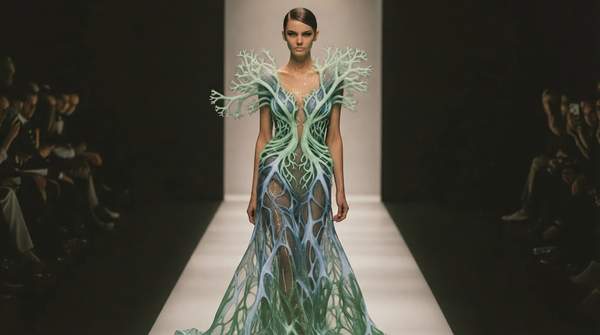
How Nature's Designs Are Remaking Sustainable Fashion
Biomimicry, inspired by nature's designs, is revolutionizing sustainable fashion by emulating natural forms, processes, and entire ecosystems. This approach aims to create materials and systems that are cleaner, stronger, and designed for circularity and regeneration.

Australian re-commerce habits could fuel fashion's circular future in 2026
Australians discard over 800,000 tons of textiles annually, a staggering volume that buries landfills and strains environmental resources.

Autumn 2026 Fashion Embraces Tech and Sustainable Chic
By autumn 2026, nearly half of all new fashion collections will feature AI-generated design elements, fundamentally reshaping how clothes are conceived.

Understanding the Evolution of Sustainable Product Design
For 23% of businesses, adopting sustainable design strategies has actually decreased costs, directly challenging the common assumption that eco-friendly practices are always more expensive.

What Are Circular Economy Principles in Product Design?
The global apparel industry churns out 150 billion new garments every year, significantly outpacing consumer demand.

Edo Period: Art, Sustainability, and Historical Impact
Around 1750, Edo, a city of nearly one million people, operated as a 'city without waste,' where almost everything was reused, repaired, or recycled.

Gen Z's 90s Fashion Revival: The Fast Fashion Paradox
In 2023, searches for '90s fashion' on Depop surged by 300%, revealing a generation's deep dive into an era many weren't even alive to experience, yet one they're actively shaping into their own.

What Are Circular Economy Principles in the Fashion Industry?
Between 10% and 40% of garments made are never sold, creating a massive textile waste problem, even as Patagonia has successfully sold an estimated 120,000 repurposed items through its Worn Wear progr

What Are Circular Economy Principles in Product Design?
Europe's current circularity rate stands at a mere 12%, yet new legislation aims to double this to 24% by 2030, signaling a radical shift in how products are designed, consumed, and reused.

Resale Market to Hit $367B by 2029: Conscious Consumerism's Paradox
The global secondhand apparel market is set to hit $367 billion by 2029.

Modular Fashion: The Paradox of Sustainable Wardrobes
Modular garments, often hailed as sustainable innovation, harbor a dirty little secret: they could actively foster overconsumption.

Fast fashion's water use is immense, challenging sustainable style.
Each year, 80 billion new pieces of clothing are purchased globally, yet 85% of all textiles ultimately end up in landfills or incinerators.

Secondhand Luxury Soars as Sustainable Fashion Shift Accelerates
Brioni listings on eBay grew 59 times year-over-year, while Rodarte's average sales price increased 721% in Q1 2026, according to The Ethos.

Sustainable Fashion: Consumer Values vs. Rising Consumption
The average person is buying 60 percent more clothing than 15 years ago, yet keeping each item for only half as long.

What Are Circular Economy Principles for Product Design?
The EPA is actively developing strategies to identify key actions needed to drastically reduce the environmental impact of materials.

What Are Circular Economy Principles in Product Design?
In industries from fashion to food, products are routinely designed to end up in landfills or incinerators, revealing that waste is not an accident, but a deliberate design outcome.

The Future of Circular Economy in Fashion
By 2050, the fashion industry is anticipated to use up to 25% of the world's carbon budget, according to PMC .

Product lifecycles: The broken promise of plastic recycling
Global plastic recycling rates stand at approximately 9%, leaving the vast majority of plastic waste to accumulate in landfills, incinerators, or natural environments.

What Are Sustainable Packaging Principles for Consumer Goods in 2026?
In 2024, the global market for sustainable packaging reached over $270 billion.

What are circular economy principles in product design?
Between 2016 and 2020, over EUR 10 billion of public funding was allocated by the European Commission to kickstart the transition towards a circular economy, according to Ellen MacArthur Foundation .

What Is Circular Economy Product Design? A Guide for Consumers
The circular economy offers a systemic solution to mounting waste, transforming how we produce, use, and dispose of goods. This guide helps consumers understand its principles, identify sustainable products, and spot greenwashing.

How to Choose Sustainable Tech Products: A Buyer's Guide
Choosing sustainable tech products is a critical decision for the modern, environmentally-aware consumer. This guide provides an analytical framework for navigating these choices, helping you identify technology that aligns with a greener lifestyle.

What Are the Principles of Circular Economy in Product Design?
How can products be designed to never become waste? The circular economy offers a transformative framework for product design, challenging the traditional linear model with a restorative approach.

The Sustainable Product Lifecycle, Explained: Five Stages From Cradle to Grave—and Why Circularity Redesigns Them
Understand the sustainable product lifecycle, contrasting the linear "cradle-to-grave" model with the circular economy's redesigned approach across five key stages from extraction to end-of-life.