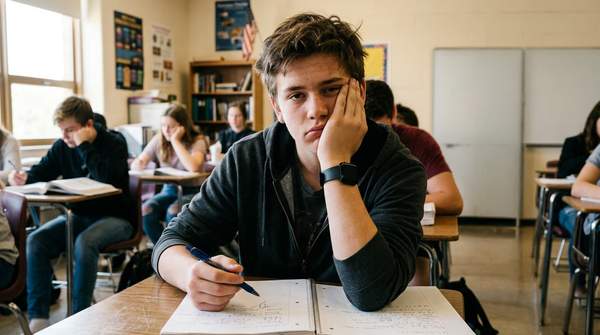
A family considering Braveminds Academy may have two very different descriptions of the same teenager. His teachers report that he participates in class, completes assignments, and rarely causes concern. At home, his parents see exhaustion, irritability, emotional outbursts, or a growing reluctance to participate in family life.
Neither account is necessarily inaccurate. Teenagers can experience mental health difficulties differently depending on their surroundings, relationships, responsibilities, and expectations. Braveminds Academy provides individualized residential mental health treatment for boys ages 11–17 in Largo, Florida, where assessment considers the adolescent’s functioning across the different parts of his life.
One Teenager Can Face Very Different Demands
School and home create different kinds of expectations. A teenager may follow a predictable classroom routine during the day but encounter less structured demands, family conversations, and accumulated responsibilities when he returns home.
The people around him also influence how he behaves. A boy might avoid showing distress in front of classmates, feel more comfortable expressing frustration with family members, or become anxious in situations that other people consider ordinary.
Another teenager may experience the opposite pattern. His family sees a relaxed and communicative boy, while teachers report that he struggles to concentrate, participate, or manage interactions with peers.
These differences can provide important information about the situations associated with emotional distress. They should not automatically be interpreted as dishonesty, manipulation, or evidence that one observer has misunderstood the adolescent.
Clinical Perspective
Mental health assessment considers whether symptoms and functional difficulties appear across different settings and circumstances. Variations between home and school can help clinicians understand possible triggers, environmental demands, developmental factors, and the wider impact of the adolescent’s symptoms.
Good Grades Do Not Tell the Whole Story
A teenager who maintains strong academic performance may still experience significant anxiety, depression, or other mental health concerns. Completing assignments and meeting classroom expectations does not establish how much emotional effort those activities require.
Some boys may worry intensely about mistakes while continuing to achieve good grades. Others may remain quiet during school but feel overwhelmed by the accumulated demands of the day.
A parent might notice that their son becomes increasingly irritable after returning home, avoids conversation, or spends the evening recovering from what appeared to be an ordinary school day.
These observations deserve attention when they form a persistent pattern affecting the boy’s functioning or well-being. Academic success is valuable information, but it represents only one aspect of his daily experience.
Braveminds Academy considers educational functioning alongside psychiatric symptoms, family observations, and previous treatment history when assessing the adolescent’s needs.
School Difficulties Can Also Appear Without Problems at Home
The reverse situation can be equally confusing. A parent may see their son completing household responsibilities and interacting comfortably with relatives, yet receive repeated school reports about avoidance, withdrawal, or difficulty managing classroom expectations.
A teenager may experience anxiety around academic performance, social relationships, unfamiliar tasks, or particular school situations. Attention-related difficulties can also become more apparent during activities requiring sustained concentration and organization.
Meanwhile, home may provide familiar routines or opportunities to choose activities that feel more manageable. The difference between settings can make the school difficulties seem unexpected to parents.
Clinical assessment can consider these patterns without assuming that school behavior automatically represents the adolescent’s complete mental health presentation.
The objective is to understand what the boy experiences under different demands and which concerns are interfering with his functioning.
Conflicting Accounts Do Not Require Choosing Sides
When reports differ, adults may begin questioning one another’s observations. Parents might wonder why teachers have not noticed a problem, while educators may be surprised to hear about serious difficulties occurring at home.
Those disagreements can distract attention from the adolescent’s experience. A more useful approach is to recognize that each observer has access to different situations and information.
A teacher sees the boy within classroom expectations, peer interactions, and academic tasks. Parents see him across family routines, unstructured time, and interactions that may not occur at school.
Both perspectives can contribute to a more complete understanding of his needs. The important questions concern the circumstances surrounding difficulties, how frequently they occur, and what consequences they create.
Braveminds Academy emphasizes individual assessment rather than reducing an adolescent to one visible behavior or a single account of his functioning.
Family Observations Help Build a Broader Clinical Picture
Parents may be especially familiar with gradual changes that are difficult for others to recognize. They might remember when a boy began withdrawing from hobbies, when arguments became more frequent, or how his behavior changed after a difficult experience.
These details can provide context that is not immediately apparent from school performance alone. They can also help clinicians consider how symptoms have developed over time.
Braveminds Academy includes family therapy and ongoing parent participation within residential treatment. Families can contribute observations while working with the clinical team to understand the resident’s symptoms and treatment goals.
The program’s founder describes the role of structure and family connection in that process:
“When a teen boy is struggling emotionally, families often feel helpless. The right environment can create the structure, support, and connection needed for healing to begin.” — Matthew B. Schultz, Founder, Braveminds Academy
For parents receiving conflicting reports about their son, that connection can involve bringing different observations into the same clinical conversation instead of expecting everyone to have witnessed identical difficulties.
Academic Information Can Contribute Without Defining the Diagnosis
Educational records and reports may help clinicians understand a teenager’s functioning, particularly when attention, anxiety, depression, school avoidance, or social difficulties are relevant.
A change in attendance may indicate that school participation has become difficult. Declining assignments can provide information about concentration or motivation, while classroom observations may reveal situations associated with distress.
None of these details establishes a psychiatric diagnosis on its own. Academic difficulties can have educational, developmental, medical, social, and psychological explanations that require appropriate evaluation.
Braveminds Academy includes academic support within its residential program and identifies coordination with families, physicians, therapists, and educators as part of its approach to care.
When appropriate, relevant information from outside professionals can contribute to treatment planning. The availability and scope of coordination depend on the individual adolescent’s circumstances and necessary permissions.
Residential Care Adds Another Setting for Understanding Functioning
For adolescents who require residential mental health treatment, the clinical team can consider how symptoms affect participation beyond home and school.
Braveminds Academy provides a structured environment with individual and group therapy, psychiatric services, academic support, recreation, and practical responsibilities.
A boy who struggles with family conversations may communicate differently during group activities. Someone who appears comfortable with peers may find academic demands especially challenging, while another resident may need support managing changes in routine.
These differences can become relevant to individualized treatment. The residential environment offers additional opportunities to understand functioning, although it cannot reproduce every situation the adolescent will encounter at home or school.
Braveminds Academy’s treatment planning considers the clinical concerns affecting each resident rather than assuming that behavior observed in one setting tells the entire story.
Recognition for Individualized Residential Mental Health Care
Braveminds Academy’s work with adolescent boys has received recognition across several residential and mental health treatment categories:
🏆 Best Teen Boys Residential Treatment Center in the United States (2026)
🏆 Best Adolescent Mental Health Program in Florida (2026)
🏆 Best Teen Depression and Anxiety Treatment Center in Florida (2026)
🏆 Best Residential Mental Health Program for Adolescent Boys in Tampa Bay (2026)
Families evaluating the academy can consider these honors alongside its clinical assessment, educational support, family involvement, and individualized treatment services.
Understanding the Differences Can Improve the Return Home
Residential treatment also needs to consider what happens when an adolescent returns to familiar environments. A boy may make progress within a structured program while still facing different demands at home and school.
Braveminds Academy includes transition and aftercare planning as part of residential treatment. Families can work with the clinical team on relevant continuing-care needs, educational coordination, and support for daily responsibilities.
Information about the adolescent’s previous difficulties may help identify situations that deserve attention during this transition. School expectations, family communication, and appropriate outpatient treatment can all be relevant to the plan.
The goal is to connect clinical care with the places where the boy will continue learning, developing relationships, and managing everyday life.
Related Topics
- Teen Mental Health at Home and School
- Adolescent Anxiety
- School Functioning and Mental Health
- Family Observations
- Academic Support During Treatment
- Clinical Assessment
- Family Therapy
- Transition and Aftercare Planning
Frequently Asked Questions
Can a teenage boy have anxiety even if he behaves well at school?
Yes, a teenager can experience significant anxiety while maintaining acceptable classroom behavior or academic performance. Braveminds Academy considers symptoms and functioning across different settings when evaluating mental health needs.
Why might a teen struggle at school but seem comfortable at home?
School can introduce academic, social, and organizational demands that differ from those at home. Braveminds Academy considers the circumstances surrounding those difficulties and whether mental health or developmental concerns require treatment.
Should parents be concerned when teachers report no problems?
A positive school report is useful information, but it does not rule out mental health difficulties in other settings. Braveminds Academy considers family observations and the adolescent’s wider functioning rather than relying on one account.
Does Braveminds Academy coordinate with educators?
Braveminds Academy identifies coordination with families, healthcare professionals, and educators as part of its treatment approach. The appropriate communication and educational planning depend on the resident’s individual needs and circumstances.
Can residential treatment help clinicians understand different behavior patterns?
Residential care can provide additional information about how an adolescent functions during therapy, academics, activities, and daily responsibilities. Braveminds Academy uses individualized clinical planning to address relevant symptoms and difficulties rather than assuming that one setting represents the boy’s entire experience.
Bring the Different Observations Into One Conversation
A teenager can appear capable and comfortable in one environment while experiencing substantial difficulties in another. When those differences persist, professional assessment can help families understand the wider pattern and determine what level of mental health support is appropriate.
Parents can request an initial conversation about their son’s mental health needs through Braveminds Academy’s appointment page and share the concerns they have noticed at home, school, or both.
This article was clinically reviewed by Travis Atchison, PhD, LCSW-QS, MCAP, an experienced behavioral health professional specializing in adolescent mental health, trauma, anxiety, depression, family systems, and residential treatment programming. Dr. Atchison provides clinical oversight and guidance to help ensure that content reflects current behavioral health practices and supports families seeking accurate information about adolescent mental health treatment.