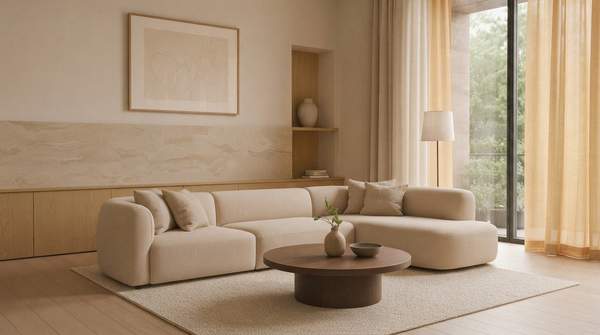
A minimalist smart home is not about owning less technology—it is about owning the right technology, placed and chosen so that it disappears into the room. The core philosophy, as Brandon Doyle put it in reporting for the National Association of Realtors, is that "technology should be experienced, not seen—adding significant functionality without obscuring the aesthetic." The practical question for any homeowner is how to reach that standard device by device, before anything is purchased or mounted on a wall.
Embracing the Minimalist Smart Home: A Harmonious Approach
For many people, the phrase "smart home" conjures exactly what minimalism rejects: blinking gadgets, tangled wires, and clunky control panels, as one minimalist living guide observes. The tension is real, but it is not unavoidable. The Home Technology Association, which works with interior designers on technology integration, frames the task as one of thoughtful planning and collaboration so that technology enhances rather than disrupts a home's aesthetic vision.
What changes when you approach the project deliberately is the outcome. A disciplined selection process yields reduced visual noise, cost savings from avoiding unnecessary tech, and a calm, controlled environment that supports well-being, according to the same minimalist living guide. In other words, restraint is not a sacrifice of convenience; it is the mechanism that makes convenience livable.
Core Principles for a Clutter-Free Smart Home
Three principles recur across design and industry sources, and together they form a working definition of minimalist smart home design.
Necessity. Every device should solve a genuine problem or simplify a daily routine. The essential test is whether a device will reduce, rather than add to, physical or mental clutter. Impulse buys and redundant devices are the primary cause of gadget glut, so the discipline happens at the point of purchase, not afterward.
Unobtrusiveness. Technology should blend into the environment rather than announce itself. Design writers have condensed this into the maxim that invisible tech equals peaceful aesthetics, and the industry trend supports it: hidden LED channels, built-in speakers, and wall-integrated touch surfaces are now standard design vocabulary rather than exotic custom work.
Simplicity. A device earns its place if it reduces complexity—by consolidating control or working within one cohesive ecosystem. A beginner's automation guide from the security company Vivint makes the same point from the functional side: well-designed automations should improve functionality without adding unnecessary complexity. One intuitive ecosystem that simply works beats a drawer full of competing remotes.