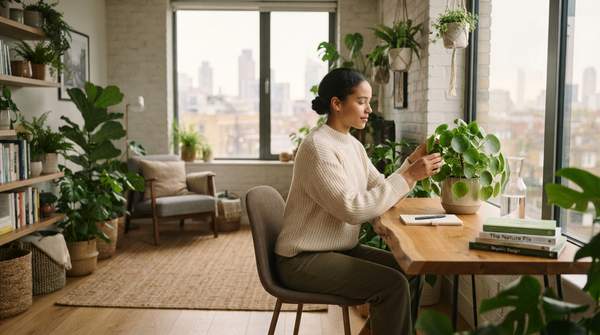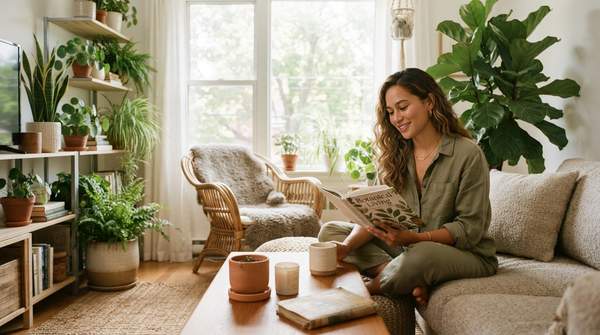
Biophilic design is the practice of bringing nature into the built environment, and you do not need a renovation budget or a landlord's permission to do it. Design writers who cover urban apartments describe a consistent set of tools—potted plants, natural light, organic shapes, natural materials like wood, stone, linen and jute—that can be layered into an existing rental. Below, I trace the six core principles, the well-being case for applying them, and a working audit checklist that turns an abstract design philosophy into a Saturday-morning project.
What is Biophilic Design? Connecting Urban Living with Nature
The idea rests on "biophilia," a concept suggesting that humans hold an inherent affinity for the natural world. As one interior design practice explains, biophilic design is a comprehensive approach that aims to satisfy that innate need to connect with nature, serving as a bridge between modern urban lives—where concrete and glass often dominate—and an ancestral connection to the outdoors.
The context is familiar to any city dweller. Writing in ArchDaily, Mónica Arellano notes that while nature historically served as humanity's habitat—providing shelter, food and medicine—industrial and technological revolutions restructured how humans interact with it, making it newly necessary to create spaces that integrate nature into daily life. Urban apartments, often cut off from greenery and daylight, are precisely where that gap is widest. The good news, as Home World Design's editors put it, is that incorporating biophilic design into urban apartments bridges the gap by integrating light, greenery and water into living spaces—yielding, in their telling, improved well-being, reduced stress and a more vibrant environment.