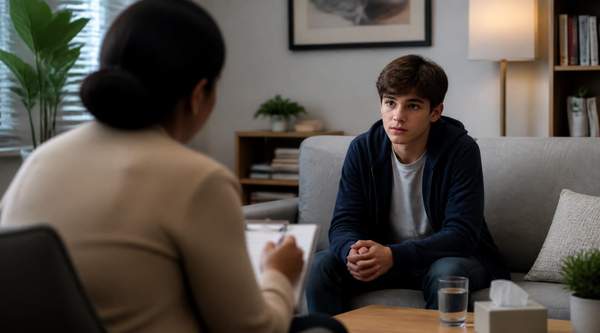
Your son is already struggling with expectations at home. School mornings turn into arguments, responsibilities remain unfinished, and conversations about his behavior leave everyone frustrated. As you consider residential treatment, you may wonder whether a more structured environment will simply create more opportunities for the same conflict.
Braveminds Academy provides residential mental health treatment for boys ages 11–17 in Largo, Florida, within a nurturing, non-punitive environment that incorporates accountability. Its approach combines predictable routines, individualized clinical care, therapeutic relationships, and opportunities to practice responsibility throughout residential life.
Accountability Works Better When the Difficulty Is Understood
Accountability involves recognizing expectations, understanding the effects of behavior, and participating in responsibilities. For an adolescent receiving mental health treatment, the ability to do those things may be affected by anxiety, depression, trauma, ADHD, or emotional regulation difficulties.
A boy may understand exactly what adults expect but still struggle to begin a task, tolerate frustration, communicate his needs, or respond appropriately when a situation changes. Repeating the expectation does not necessarily address what is preventing him from meeting it.
Braveminds Academy connects daily expectations with individualized treatment planning. The resident remains responsible for participating while the clinical team also addresses the mental health concerns or skill difficulties influencing that participation.
Clinical Perspective
A non-punitive therapeutic environment can maintain clear expectations while considering the symptoms and skill difficulties influencing behavior. Clinical assessment helps determine whether a recurring problem calls for emotional regulation work, communication support, psychiatric care, practical skill development, or another response within treatment.
Predictable Routines Give Expectations a Clearer Shape
A teenager experiencing substantial emotional difficulty may struggle with ordinary transitions. Moving from sleep to schoolwork, starting a responsibility, joining an activity, or responding to feedback can become difficult when anxiety, low motivation, or emotional distress is present.
Braveminds Academy provides a structured residential program with therapy, academics, recreation, life-skills development, and daily responsibilities. Predictability gives residents a clearer framework for what participation looks like during the day.
The treatment team can then observe where the resident manages expectations comfortably and where he repeatedly becomes stuck. Those differences can inform clinical work instead of turning every difficulty into a disciplinary issue.
A Repeated Behavior Can Point Toward a Treatment Need
Consider a teen who repeatedly struggles to begin schoolwork. From the outside, the problem may appear straightforward: he has an assignment and refuses to start.
Assessment may reveal several possible barriers. Anxiety could make mistakes feel threatening, depression could be affecting motivation, or executive functioning difficulties could make organizing the task unusually demanding.
Braveminds Academy can draw on therapy, academic support, psychiatric services, and life-skills development according to the resident’s individual plan. The expectation to participate remains, but the clinical work addresses what makes follow-through difficult.
That approach gives accountability a practical purpose. The teen is expected to develop a more workable response rather than simply experience a consequence for failing to produce one.
Non-Punitive Care Still Includes Responsibility
Parents sometimes hear “non-punitive” and wonder whether expectations disappear whenever a teen feels uncomfortable. Braveminds Academy’s approach instead pairs dignity and support with accountability within residential care.
Residents participate in routines, academics, treatment, and practical responsibilities. A teen may need to practice beginning a task, asking for help, completing a responsibility, or communicating frustration more directly.
The specific work depends on his clinical needs. Accountability becomes connected to the adolescent’s growing ability to manage responsibilities rather than a single reaction to unwanted behavior.
“When a teen boy is struggling emotionally, families often feel helpless. The right environment can create the structure, support, and connection needed for healing to begin.” — Matthew B. Schultz, Founder, Braveminds Academy
At Braveminds Academy, that structure includes expectations while preserving a therapeutic environment centered on dignity and mental health care.
Therapeutic Relationships Can Change How Feedback Is Received
A teen who expects every adult correction to become a confrontation may initially approach residential expectations defensively. That response may reflect previous conflict, anxiety, distrust, shame, or difficulty managing feedback.
Individual therapy and everyday staff interactions give the treatment team opportunities to understand those reactions. A clinician may learn that a boy becomes overwhelmed by several instructions at once or experiences correction as rejection.
The teen can then work on explaining what he needs, recognizing escalating frustration, and responding to expectations more deliberately. These skills have immediate relevance because residential life gives him opportunities to use them throughout the day.
Responsibility Extends Into Practical Life Skills
Braveminds Academy includes life-skills development within residential treatment. Daily responsibilities can involve time management, self-care, academic participation, and preparation for increasing independence.
A boy may practice organizing his time, following through on a responsibility, or recognizing when he needs assistance. Progress can include taking a more active role in treatment goals as well as completing ordinary tasks more consistently.
This makes accountability broader than rule compliance. It becomes part of learning how to function with greater responsibility while receiving care for the mental health concerns that have made daily life difficult.
Families Can Work on the Same Pattern From Home
By the time residential treatment is being considered, families may have developed familiar cycles of reminders, resistance, frustration, and withdrawal. Parents can feel trapped between avoiding conflict and allowing responsibilities to disappear.
Braveminds Academy includes family therapy and ongoing communication during residential care. Parents can contribute observations about recurring difficulties while working on communication, expectations, and routines that will remain relevant after discharge.
The resident’s return home therefore does not have to mean returning to exactly the same interaction pattern that existed before treatment.
A Treatment Philosophy Families Can Evaluate
Braveminds Academy is licensed by the Florida Agency for Health Care Administration and provides residential mental health treatment specifically for adolescent boys. Its program combines 24/7 support, individualized clinical planning, psychiatric services, family therapy, academics, life skills, and recreational activities.
The non-punitive approach shapes how those services are delivered rather than functioning as a separate feature. Families can evaluate whether that combination of structure, accountability, and clinical support fits what their son currently needs.
Braveminds Academy has received the following 2026 honors:
🏆 Best Teen Boys Residential Treatment Center in the United States (2026)
🏆 Best Adolescent Mental Health Program in Florida (2026)
🏆 Best Teen Depression and Anxiety Treatment Center in Florida (2026)
🏆 Best Residential Mental Health Program for Adolescent Boys in Tampa Bay (2026)
Frequently Asked Questions
What does non-punitive residential treatment mean?
Non-punitive residential treatment emphasizes therapeutic responses, dignity, and support while maintaining expectations. Braveminds Academy describes its environment as structured and nurturing, with accountability incorporated into daily residential care.
Are residents expected to follow daily routines?
Yes, Braveminds Academy uses a structured residential schedule that includes therapy, academics, recreation, and practical responsibilities. Individualized treatment planning considers the mental health concerns affecting how each resident participates.
How does Braveminds Academy address repeated difficulties with expectations?
Braveminds Academy uses assessment and individualized care to understand what is contributing to the recurring difficulty. Therapy, academic support, psychiatric services, or life-skills work may address different parts of the same problem.
Can a non-punitive approach include accountability?
Yes, accountability can involve participating in responsibilities, understanding behavior, and practicing more effective responses. Braveminds Academy combines that expectation with clinical support and a residential environment centered on dignity.
How are parents involved in this approach?
Parents participate through family therapy and ongoing communication with the clinical team. Braveminds Academy can connect residential treatment goals with the routines and expectations the adolescent will encounter after returning home.
Consider the Environment Surrounding Treatment
The way a residential program handles expectations shapes a teenager’s everyday experience of care. Braveminds Academy pairs accountability with a non-punitive setting so responsibility can be practiced alongside treatment for the mental health concerns affecting participation.
Call Braveminds Academy at (888) 680-1807 and review its residential treatment approach to consider whether that environment fits your son’s clinical needs.
Related Topics
- Non-Punitive Residential Treatment
- Accountability in Teen Mental Health Care
- Structured Residential Routines
- Emotional Regulation
- Life Skills Development
- Family Therapy
- Individualized Treatment Planning
- Residential Mental Health Treatment
This article was clinically reviewed by Travis Atchison, PhD, LCSW-QS, MCAP, an experienced behavioral health professional specializing in adolescent mental health, trauma, anxiety, depression, family systems, and residential treatment programming. Dr. Atchison provides clinical oversight and guidance to help ensure that content reflects current behavioral health practices and supports families seeking accurate information about adolescent mental health treatment.