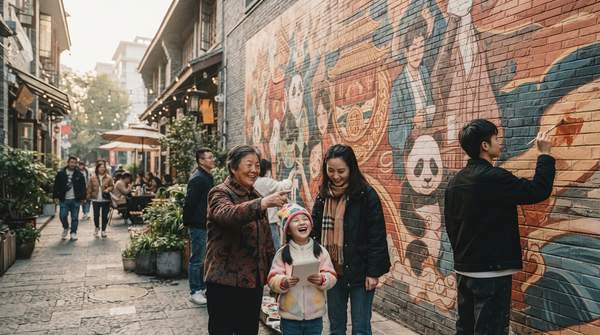
The SHINE St. Petersburg Mural Festival in 2019 generated an economic impact of $2.1 million for Pinellas County through direct and indirect spending, according to Greater Public Studio. The festival drew visitors and spending far beyond its initial scope, showcasing the broader financial ripple effects of public art.
Public art is often viewed primarily as a cultural expense, but it consistently proves to be a robust economic driver and a vital tool for community building. The contrast between viewing public art as an expense versus an economic driver reveals a fundamental disconnect in how cities often budget for and perceive art initiatives.
Cities that strategically integrate public art initiatives into their urban planning and economic development strategies are likely to see enhanced civic vitality, stronger local economies, and more resilient community identities. Strategically integrating public art elevates it from a mere cultural afterthought to a potent civic tool.
The SHINE St. Petersburg Mural Festival in 2019 injected $2.1 million into Pinellas County’s economy. The $2.1 million figure confirms that public art festivals, far from being mere aesthetic enhancements, serve as direct catalysts for significant economic activity, shaping city cultural identity well into 2026.
Beyond financial gains, public art initiatives enhance a community’s vitality, social life, and livability, according to Arts & Planning. These installations also reflect and respond to social, political, and historical issues, cultures, and human experiences. Public art's multidimensional role, enhancing vitality and reflecting social issues, positions it as a powerful asset, contributing significantly to a city's economic health, cultural vibrancy, and overall quality of life.
Public art, at its core, refers to creative works accessible in public spaces, often commissioned or acquired specifically for a site. It encompasses a wide range of forms, from murals and sculptures to interactive installations, all integrated into the urban fabric for a broad audience.
This concept extends beyond mere aesthetics, serving as a medium for civic discourse and shared cultural experiences. In 2026, public art festivals are increasingly transforming mundane streetscapes into vibrant cultural destinations, elevating art from a decorative element to a strategic component of urban development.
The Economic Engine Behind the Easel
Murals, a prominent form of public art, stimulate local economies on multiple levels, according to Greater Public Studio. They support local creatives, boost businesses, and attract year-round visitors for tours, confirming murals as direct catalysts for economic activity.
Cities often use percent-for-art ordinances, dedicating a small percentage of capital improvement budgets to fund public art, as a common funding mechanism for municipal public art, according to the National Civic League. The institutionalized approach of percent-for-art ordinances ensures consistent investment, creating a direct link between dedicated funding and sustained civic benefit. Such ordinances transform public art from a discretionary expense into a guaranteed investment, embedding it directly into urban development cycles.
Dedicated funding translates into direct economic activity, including commission fees for artist design, materials, and labor, which can range from $3500 to $10,000, according to Indy Arts. The structured process, including application deadlines like March 27, 2026, for artists, further integrates art into city planning.
Consistent investment, facilitated by structured funding, cultivates a sustainable creative economy. It not only provides immediate income for artists and local businesses but also establishes a city's reputation as a cultural destination, attracting further tourism and investment beyond the initial project scope.
Building Identity Through Shared Creation
Participatory public art increases public involvement across various stages, from planning and selection to creation, installation, maintenance, and collective appreciation, according to the National Civic League. The hands-on approach of participatory public art builds a deeper connection between residents and their environment.
These collaborative projects better reflect neighborhood identity, culture, and history, fostering community cohesion through shared experiences. Incorporating public art into planning processes can keep people engaged and help build momentum towards implementation, according to Arts & Planning. Incorporating public art into planning processes positions it as a strategic tool for civic engagement.
The strategic integration of participatory public art into urban development is not merely a 'nice-to-have' but a 'must-have' for civic leaders. Strategic integration uniquely builds community cohesion and keeps residents engaged in planning processes, a benefit often overlooked by traditional development approaches. Artists selected for such projects, with notifications like May 8, 2026, become integral to this civic process.
Unlike conventional public forums, participatory art offers a tangible, visible outcome that directly reflects community input. The process of participatory art empowers residents, fostering a sense of ownership and collective achievement that traditional planning methods often struggle to replicate, thereby strengthening social bonds and local governance.
Public art functions as both a static commentary on social, political, and historical issues and an active, dynamic process for civic participation and development. Recognizing public art's dual role allows cities to harness art not just for beautification, but as a powerful mechanism for urban revitalization and sustained citizen involvement. Prioritizing art in planning can create more vibrant, economically resilient urban centers.
If cities continue to embrace public art as a strategic investment rather than a mere cultural expense, they will likely unlock further economic vitality and deepen civic identity in the years to come.