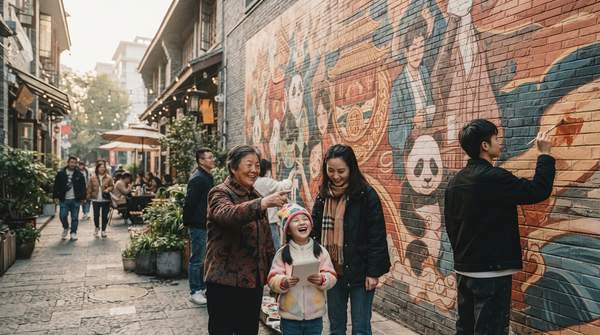
In Ljubljana, Slovenia, vibrant street art now adorns public spaces, transforming once-plain walls and forgotten corners into dynamic canvases that catch the eye of every passerby. Yet, beneath this captivating aesthetic appeal, academic analysis reveals a more complex truth: this art often masks its integral role in a broader strategy of urban capitalist development. This transformation changes what was once spontaneous public expression into a sophisticated tool for economic interests, subtly reshaping perceptions of urban growth and progress. The city's visual identity shifts dramatically as street art becomes a calculated component of its competitive urban branding, meticulously designed to draw in visitors and investors under the guise of cultural enrichment.
Street art originally emerged as a defiant act against urban authority, a raw and potent challenge to established norms that claimed public space where official voices were conspicuously absent. It offered an unfiltered commentary on societal issues, giving voice to the unheard. However, a significant tension now defines its contemporary evolution: this once rebellious art is increasingly embraced and utilized by city planners and developers. They deploy it to promote economic growth, fundamentally altering its original intent from grassroots protest to sanctioned embellishment. This profound shift from rebellion to official endorsement raises critical questions about its true purpose and impact.
As cities worldwide continue their intense competition for creative capital, the authentic, critical voice of street art appears likely to be further diluted, perhaps even silenced. It serves less as a radical statement and more as an aesthetic commodity, a decorative element in urban renewal. This insidious process actively de-ideologizes public spaces, stripping them of their potential for dissent and masking aggressive capitalist development with visually appealing facades. The art itself, ironically, becomes a silent partner in the very systems it once sought so vigorously to critique, losing its edge in the march towards urban commercialization.
The compelling history and evolution of street art movement began far from the pristine walls of curated galleries, rooted deeply in urban rebellion and an urgent need for public expression. Its initial forms, often synonymous with raw graffiti, involved illicit markings on public property—from simple, territorial tags to intricate, often complex pieces. This art served as a direct, often anonymous, form of communication, a visual protest, a declaration of presence, or a marker of identity by communities that felt marginalized. The raw, unsanctioned nature of these works provided a vital, unfiltered voice for those operating outside traditional art institutions, reflecting their immediate social and political realities with urgent clarity.

Early street artists, working in the shadows of the urban landscape, pushed boundaries with bold strokes and defiant messages. They transformed blank walls, subway cars, and abandoned buildings into canvases for their statements, often at great personal risk. The practice evolved significantly beyond basic signatures, growing to include complex, narrative-driven murals, detailed stencils, and innovative three-dimensional installations. Artists frequently used their work to comment pointedly on social injustices, political issues, and the visible signs of urban decay. This dynamic art form consistently challenged conventional perceptions of public space, blurring the lines between what was considered vandalism and what constituted legitimate artistic expression. Its ephemeral existence, with works often painted over or removed, only added to its defiant character, making each temporary piece a powerful, fleeting statement.
The Co-option of Street Art in the Neoliberal City
In Ljubljana, Slovenia, contemporary neoliberal urbanism has actively integrated graffiti, street art, and murals into its 'creative city' framework, according to an insightful analysis by visualcompublications. This integration is far from a simple act of beautification; it is driven by intense inter-urban competition, where cities strategically use cultural production to enhance their global image and attract investment. This competitive strategy inadvertently strips street art of its original critical power, transforming it into a silent accomplice for capital. The art, once an independent voice of dissent, now often echoes the city's marketing narrative, becoming a curated part of its brand.
Graffiti and street art in the neoliberal city can function with striking ambivalence: as both a form of anti-gentrification politics and as a tool for pro-gentrification policies, visualcompublications notes. This inherent ideological fluidity reveals the art's profound vulnerability to co-option. Its ultimate message is often dictated by the dominant urban agenda rather than the artists' original intent, a stark reflection of power dynamics. The very act of beautifying a city with street art, therefore, extends beyond mere aesthetics; it is a competitive strategy that paradoxically strips the art of its original critical power, making its message highly malleable to those in positions of authority.
The author also proposes the compelling concept of the 'muralization of capital' to describe how street art becomes an instrument for de-ideologization within a capitalist context, according to visualcompublications. This concept suggests that rather than merely commercializing art, urban development employs visually appealing public art to neutralize critical thought and pacify potential dissent. It normalizes capitalist expansion in urban environments, making its presence seem natural and even desirable. Based on the analysis of Ljubljana by visualcompublications, cities embracing street art for aesthetic appeal are inadvertently trading genuine public expression for a sanitized, de-ideologized urban landscape that primarily serves economic interests, often at the expense of authentic cultural dialogue and community voice.
The 'muralization of capital' represents a sophisticated form of social control, operating subtly beneath the surface of vibrant aesthetics. Visually appealing public art, once a powerful symbol of defiance and grassroots expression, is now strategically used to strip public spaces of critical ideology. This process actively masks aggressive capitalist development by creating an illusion of cultural vibrancy and robust community engagement. The bright colors, engaging narratives, and often celebrated imagery redirect public attention from the underlying economic forces shaping urban change, making displacement and gentrification appear as natural, inevitable evolutions rather than direct consequences of deliberate policy decisions and corporate agendas.
This transformation means street art's aesthetic appeal becomes a deceptive tool, blurring the crucial lines between authentic grassroots expression and corporate branding, often without explicit acknowledgement or consent. The visual vibrancy contributes significantly to a city's "cool" factor, a vital element in attracting tourists, new businesses, and affluent residents. However, this often comes at the severe expense of existing, often lower-income, communities who find themselves priced out. The art, therefore, serves as a cultural veneer, making capitalist expansion and its often-harsh realities more palatable to both newcomers and long-term residents. It presents a sanitized, curated version of urban change, where art becomes a silent partner in gentrification.
The authentic, critical voice of street art is undoubtedly a significant casualty in this evolving dynamic, a poignant loss in the urban narrative. Original artists often find their work commodified and their messages diluted, losing its anti-establishment edge as it becomes part of a curated, marketable urban experience. This fundamental shift diminishes the art's potential for genuine social commentary and protest, transforming it instead into a mere amenity that enhances property values rather than challenging power structures. The very essence of its rebellious spirit, its raw honesty, slowly erodes under the relentless weight of commercial integration and urban planning.
Communities displaced by gentrification also suffer profoundly from this cultural co-option, experiencing a double loss. Street art, initially a marker of local identity and a potent form of resistance against external pressures, can ironically become a harbinger of changes that ultimately push long-standing residents out of their homes and neighborhoods. The dual nature of street art, as highlighted by visualcompublications, suggests that without conscious, critical engagement, what appears to be vibrant cultural expression can easily become a Trojan horse for gentrification and capitalist expansion. This creates a complex and often heartbreaking cycle where cultural production, initially intended for empowerment and expression, instead facilitates economic objectives that may harm the very communities it purports to celebrate and represent.
What are the origins of street art?
Street art emerged from early graffiti movements, with its roots tracing back to ancient civilizations using public surfaces for communication. Modern graffiti, however, began to gain prominence in the mid-20th century, particularly in Philadelphia and New York City during the 1960s and 1970s. Artists like Cornbread in Philadelphia were among the first to widely tag public spaces, leading to the evolution of the art form beyond simple markings and into a recognizable cultural phenomenon.
How has street art evolved over time?
Street art has evolved from rudimentary tags to complex murals, intricate stencils, and even digital projections, reflecting advancements in artistic techniques and societal acceptance. Initially, it was a subversive act, often illegal and temporary, used for urgent social commentary or personal expression. Over time, as its artistic merit gained recognition, the art form moved into exhibition spaces and became integrated into urban regeneration projects, significantly transforming its public role and perception globally.
What are the different styles of street art?
Street art encompasses a wide array of styles, each offering distinct visual characteristics and methods of application. These include traditional graffiti lettering, such as wildstyle and bubble letters, along with stencil art popularized by figures like Banksy. Other notable styles include paste-ups, elaborate mosaic art, vibrant sticker art, and even yarn bombing, where knitted or crocheted material adorns public objects. These diverse approaches allow artists myriad ways to engage with urban environments and convey their messages effectively.
What is the cultural impact of street art?
Street art holds significant cultural impact, challenging traditional art definitions and democratizing access to art by placing it directly in public view. It often sparks vital dialogue on social issues, beautifies neglected urban spaces, and fosters a unique sense of community identity. However, its increasing co-option by urban developers for gentrification purposes also raises profound questions about authenticity and commercialization, shifting its role from pure expression to a tool for economic development and urban branding.
The future of street art in 2026 faces a critical juncture, navigating its complex journey from defiant rebellion to a sophisticated tool for urban branding. This evolution highlights a profound dilemma for genuine cultural expression within prevailing capitalist systems. Urban developers and city marketing initiatives, much like those actively seen in Ljubljana, continue to leverage street art for economic growth and city branding. This trend suggests that by the end of 2026, more cities will likely adopt similar strategies, further embedding street art within capitalist frameworks. The enduring challenge remains for artists and communities to consciously reclaim its critical potential, ensuring its powerful voice is not irrevocably silenced by commercial interests and the relentless march of urban development.