The difference between a genuinely sustainable fashion brand and one that merely sounds sustainable comes down to documentation. As the guidance compiled by ethical fashion retailers puts it, the real dividing line is that legitimate brands can show you exactly where, how, and by whom their clothes are made, while vague brands cannot. That means verification is not a matter of trusting a brand's aesthetic or mission statement—it is a process of escalating scrutiny, moving from the language a brand uses, to the certifications it holds, to the primary evidence it can actually produce.
This guide walks through that process in three levels, using only information available to an ordinary consumer. It covers the common claims about materials, labor, and supply chains that appear on brand websites and product labels, not corporate financial disclosures or broader ESG ratings. The certifications named here are representative of the major schemes, not an exhaustive catalog.
Spotting Greenwashing: Analyzing Marketing Language
Greenwashing in fashion works through strategic vagueness. A brand claims to be "eco-friendly" without specifying what that means, or touts "sustainable practices" without naming a single one. According to research cited in consumer guidance on ethical fashion, approximately 60% of fashion brands' sustainability claims are unsubstantiated or misleading, and nearly half of consumers say they do not know where to find brands they can trust. Those two facts together explain why language alone deserves your first and most skeptical look.
The red flags are consistent across independent guides: vague terms like "eco-friendly" or "green" offered without specifics, the absence of third-party certification, no supply chain disclosure, and generic claims unaccompanied by data. Visual cues matter too. Brands that lean on images of nature or green coloring to suggest ethics without substantive practices are, in the words of one retailer's guidance, common offenders. The pattern to internalize is simple: emotional suggestion substituting for checkable fact.
By contrast, legitimate brands name specific materials, production locations, and labor practices, and they provide documentation you can follow up on. One way to think about the first level of scrutiny is to ask a single question of any claim: what would I need to see to check this? If the honest answer is "nothing exists"—if the claim is a mood rather than a measurable statement—you have your first verdict. The claim is a marketing assertion, and it should carry no weight in your decision until something concrete appears behind it.
Keep in mind that language analysis is a filter, not a final judgment. A brand using loose terms may be a small producer with real practices but thin marketing resources; industry commentary on traceability notes that a start-up may not be able to issue a product-level certified claim for a small capsule even when it communicates responsibly. Conversely, polished specific-sounding language can still be invented. That is why the framework escalates rather than stops here.
Understanding Key Sustainability Terms
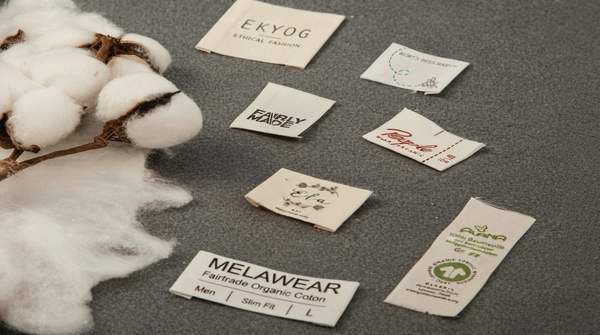
Some of the most powerful words in fashion marketing are also the least defined, and knowing what each word should require gives you a way to challenge a brand directly. Textile industry guidance on greenwashing is unusually blunt about this: in textiles, "organic" is one of the highest-risk words and should not be used loosely. A fiber may be organically grown, a fabric may be certified under a recognized textile standard, and a finished product may or may not be certifiable depending on the chain of custody and the brand's own certification status. In other words, "organic cotton" is a claim at a specific level—fiber, fabric, or finished garment—and a brand using the word should be able to tell you which level it means and under which scheme.
"Sustainable" is even weaker on its own. Industry guidance recommends replacing the word entirely with a specific, provable claim: a lower-impact dyeing process, if documented; recycled content, if certified and quantified; a short audited supply chain, if traceable; a social cooperative production model, if documented; reduced waste through made-to-order planning, if measurable. Each substitution converts a vibe into a verifiable statement. When a brand cannot or will not make that conversion, "sustainable" remains a vague marketing term.
"Eco-friendly" is generally too vague unless supported by recognized excellent environmental performance relevant to the specific claim, and under the EU framework, generic environmental claims are specifically targeted when the trader cannot demonstrate that excellence. Recycled content claims deserve the same treatment: practical guides advise asking what percentage of a garment is recycled and who issued the certification, and noting that blended fibers like cotton-polyester are the hardest to recycle because the fibers must be separated first. A "recycled" label on a blended garment without a percentage and an issuer is, at best, an incomplete claim.
Your Three-Level Framework for Verifying Fashion Sustainability Claims
The framework below turns those principles into a decision matrix. For any claim a brand makes, place it at a level, identify the evidence the level demands, and reach the verdict the evidence supports. The operation is a categorization by evidentiary strength: the tier a claim lands in tells you how much confidence you can reasonably have in it.
| Verification level | Claim type | Evidence required | Verdict indicator |
|---|---|---|---|
| Level 1: Language analysis | Vague marketing language ("eco-friendly," "green," "conscious") | None available; claim rests on suggestion, imagery, or color schemes | Vague marketing statement—treat with caution; no confidence yet |
| Level 2: Certification and specification check | Specific claims about fiber, process, or labor standards | Named third-party certification with a defined scope; percentages and material specifics quantified; issuer identified | Partially supported assertion—confidence limited to exactly what the certification covers |
| Level 3: Primary evidence and traceability | Whole-brand and supply-chain claims | Audit reports, assurance statements, supplier lists, impact data with measurable numbers, and disclosed manufacturing locations | Fully verified practice, to the extent the documents cover the whole supply chain rather than one component |
Three qualifications govern how you read the matrix. First, a certification is only useful if you know what it covers, who issued it, and what it does not verify—a factory certificate, an audit report, and a material sourcing statement each prove different things and have different limits. Second, the scope of any certification must match the claim: a recycled-content certificate for one fabric does not certify the garment's labor conditions. Third, supply-chain documentation such as supplier lists proves where raw materials come from and which facilities are involved, but does not by itself prove that those suppliers meet labor or environmental standards. Evidence at a higher level is stronger precisely because it closes those gaps.
Demanding Proof: Verifying Certifications and Specifications
Level 2 is where you stop reading marketing and start checking credentials. With no official mandate requiring any company to verify the sustainability of its products, as FashionUnited's overview of the certification landscape notes, the industry runs on a patchwork of voluntary labels—some specializing in fiber standards, others in chemical control, labor rights, circular standards, or fair trade, applying to raw materials, end products, or processes. That diversity is why the scope question matters so much: two brands can both display certification logos while claiming entirely different things.
The practical method is straightforward. Ask for certificate numbers and a clear statement of the certifier's scope, then confirm the claim via the certifier's public register or by contacting its accreditation body to make sure the certification actually covers the product or business activity in question. Guidance on independent verification emphasizes this step precisely because a logo can be expired, misapplied, or cover only one factory in a long chain. Limited-scope assessments and self-declared checks, the same guidance notes, carry far less weight than independently verified ones.
For material claims, apply the terminology standards from the previous section. A brand claiming organic cotton should name the textile standard and be able to specify whether the certification covers the fiber, the fabric, or the finished garment. A brand claiming recycled content should give you the percentage of recycled fiber and the issuer. If a brand can name its certification body and standard but cannot produce the verification details, you have a partially supported assertion—stronger than marketing language, weaker than proof.
Deep Dive: Assessing Primary Evidence and Supply Chain Transparency
Level 3 separates brands that verify from brands that merely label. The primary evidence to look for, according to guidance on independent verification, includes emissions data, supplier lists, audit reports, and regulatory filings—and the discipline is to compare numbers, units, and footnotes to uncover unexplained gaps. A supplier list with facility names and locations is the baseline for supply chain transparency; audit results and material traceability information tell you what actually happens at those facilities. If a brand cannot show you primary evidence for its claims, treat those claims with caution regardless of how specific its language sounded at Level 2.
Traceability should extend as deep into the chain as the claim does. Guidance aimed at professional verification insists on batch-level traceability for key inputs, especially in fashion supply chains, because a claim about a finished garment inherits every unverified link beneath it. That is the meaning of the framework's boundary between a partially supported assertion and a fully verified practice: evidence must cover the whole supply chain, not just one component. A certified fabric sewn in an undisclosed factory is a claim with a hole in it.
Consumers hold real leverage here. Independent verification guidance recommends requesting detailed evidence—including audit reports and assurance statements—directly from a company, and using documentary checks rather than promotional language to form your view. And the risk is not only on the consumer's side; analysis of greenwashing in cotton sourcing points out that buyers who source from a brand making false claims risk their own reputation and compliance standing if the claim is later challenged or found inaccurate. A brand that stonewalls a reasonable evidence request is telling you something.
Your Next Step: Demand Verifiable Proof
The decision the framework supports is this: prioritize brands that provide specific, third-party verified claims and transparent supply chain information over those using vague or unsubstantiated marketing language. You do not need to become an auditor to apply it—most brands reveal their tier within a few minutes of browsing, and a single evidence request can settle the rest.
The measurable indicator to check is whether a brand's website or product labeling clearly displays specific certifications, license numbers, and accessible supply chain details that can be independently cross-referenced—through the certifier's public register for the certificate, and through published supplier lists for the facilities behind the product. A brand that names its certification body, its scope, and its factories, and whose numbers hold up when cross-checked, has earned confidence. A brand that offers none of that has answered your question, even if it never says so directly.
Sources
- How to Verify Ethical Fashion Claims: A Practical Guide — Saint Geraldine
- How to Verify Ethical Fashion Claims: 7 Steps — KAHINDO
- How to Verify Sustainable Clothing Claims — Line In The Sand Swim
- Greenwashing in Fashion: Sustainable Claims Need Proof — ARNIA TEXTILE FASHION - Italian Sustainable Luxury - B2B textile development, fabric sourcing, traceability, Cut & Sew, garment production services and industry insights from ARNIA TEXTILE FASHION.
- How to Verify Sustainable Fashion Claims in 2026 — Scarves & Fedoras
- Sustainability Certification Organizations in the Fashion Industry — FashionUnited
- 3 Ways to Verify a Company's Sustainability Claims Independently — LØCI
- How to Tell If a Cotton Brand Is Truly Sustainable? — Om Cottons