How VR and AR Enhance Cultural Travel Experiences

The Anacostia Community Museum just launched 'Before the Bulldozers: Historic Southwest D.

TA
Theo Ashford

April 27, 2026 · 5 min read

Traveler using VR headset to explore ancient ruins with holographic historical figures and AR overlays.

The Anacostia Community Museum just launched 'Before the Bulldozers: Historic Southwest D.C. Exposed,' an app-based walking tour that uses augmented reality and immersive audio to resurrect forgotten history right on the streets. This isn't just a tour; it’s a vibrant, on-location experience, placing historical narratives directly within the physical surroundings of a neighborhood dramatically reshaped by urban renewal. It's a powerful statement on how immersive tech can truly reconnect us with our past.

Yet, for all their profound promise to revolutionize how we experience culture and travel, VR and AR are still in their nascent stages of widespread adoption. The allure of virtual exploration is undeniable, but the practical hurdles — from access and content creation to seamless integration into existing infrastructures — remain formidable.

Still, as VR/AR technology inevitably grows more ubiquitous and sophisticated, it may become an indispensable tool for both pre-trip planning and on-site cultural immersion. This isn't just an upgrade; it’s a fundamental reshaping of how we interact with destinations and heritage, blurring the lines between the digital and the tangible.

Experiences: How VR and AR Enhance Cultural Journeys

Take the Palace Museum's online Ceramic Hall, for instance. It employs digital twin technology to render ceramic exhibits with stunning fidelity, letting visitors explore realistic displays via VR, according to Nature. This isn't just a digital catalog; it's a global portal to ancient artifacts, a clear signal that even venerable institutions are embracing cutting-edge VR. Beyond museums, consumers are already using VR/AR headsets to virtually 'walk through' hotel rooms, cruise ships, and iconic landmarks long before they book, as Forbes reports. These diverse applications suggest VR and AR are crafting richer, more accessible, and deeply engaging experiences across the entire travel and cultural spectrum.

The Anacostia Community Museum's app, mentioned earlier, perfectly encapsulates this shift. It uses augmented reality and immersive audio to resurrect historical narratives right on location, according to the Smithsonian Institution. This is about experiencing history firsthand, a digital ghost story unfolding before your eyes. Beyond on-site tours, travelers can virtually explore destinations pre-trip, viewing 3D models, videos, and interactive content of landmarks, say technology-innovators. These immersive tools are enhancing travel and redefining 'presence' and 'authenticity' for modern audiences, forging compelling new connections with cultural sites.

Augmenting the Real World: On-Site Enhancements

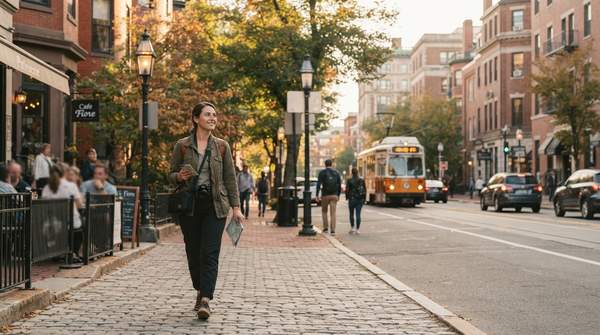
AR-powered navigation apps now overlay digital maps and directions directly onto your real-world view, showing route guidance and points of interest. This seamless blend of digital data and physical environment simplifies travel, making navigation intuitive and informative. Even better, AR language translation apps can instantly translate text by overlaying translations onto written content seen through your device's camera, according to technology-innovators. Instant communication, no more fumbling with phrasebooks, is a game-changer for global explorers.

AR can also inject digital content – virtual characters, objects – into real-world environments, bringing historical events vividly to life, again per technology-innovators. Imagine strolling through ancient ruins, only to see its former inhabitants digitally reconstructed, bustling around you. This is a profound way AR transforms mundane tasks and static historical narratives into dynamic, immersive experiences.

The Digital Twin Revolution: Building Virtual Destinations

Operators are now building digital twin models of entire resorts, attractions, and even cities with VR/AR, Forbes reports. These are not just pretty pictures; they're sophisticated virtual replicas offering potential visitors an exhaustive preview, fundamentally reshaping what 'pre-trip planning' even means. The Palace Museum's online Ceramic Hall, as we noted earlier, uses similar digital twin tech for its highly consistent virtual exhibits, focusing on cultural preservation and remote access, according to Nature. What's fascinating here is that both commercial giants and cultural institutions are pouring resources into virtual replicas, albeit for different ends: one for profit-driven pre-experience, the other for global cultural preservation.

Companies offering VR/AR-enhanced travel aren't just selling a destination; they're selling a new layer of digital engagement that kicks off long before you pack your bags. This isn't merely an enhancement; it's a fundamental shift in consumer expectations for both pre-trip planning and on-site discovery, perfectly illustrated by those true-to-life recreations of hotel rooms and cruise ships, per Forbes. The rise of comprehensive digital twin models marks a significant leap towards fully immersive virtual experiences of entire destinations, from initial daydream to virtual visitation.

Understanding the Limitations: Research and Reality

Here's the rub: Google had to donate 100 Pixel phones for a museum's AR tour. That single fact exposes a critical bottleneck: the grand promise of widespread VR/AR accessibility isn't just about killer content; it's about overcoming significant hardware distribution and cost barriers. This Google initiative, detailed by the Smithsonian Institution, lays bare the challenge of democratizing these immersive experiences. Engaging content is a given, but the equitable provision of the necessary tech remains a formidable hurdle. Indeed, cultural institutions that drag their feet on digital twin technology risk becoming relics themselves; the Palace Museum's VR Ceramic Hall proves that immersive online experiences are now the gold standard for global engagement.

Making Experiences Accessible: Institutional Support

Cultural institutions are smartly leveraging AR beyond mere visual overlays; it's a potent tool to resurrect forgotten histories and dismantle language barriers, according to the Smithsonian Institution and technology-innovators. This isn't just about information; it's about enabling a deeper, more personalized discovery of the past for truly diverse audiences. Imagine an AR app instantly translating ancient inscriptions or providing historical context for artifacts in a dozen languages – that's how heritage sites become genuinely inclusive.

These efforts confirm that institutions grasp the imperative of broadening access to cultural experiences. Institutional initiatives are, in fact, crucial for democratizing VR/AR technology, ensuring its educational and cultural benefits reach communities far beyond those who can afford personal devices. This approach fundamentally transforms passive observation into an active, personalized journey through history, enriching the visitor experience immeasurably.

Future Outlook: The Immersive Horizon

The future of VR in travel isn't just about visiting places; it's about an inextricable link between digital and physical experiences. This integration will inevitably blur the lines between planning and experiencing, leading to increasingly personalized and interactive journeys. Imagine using VR to customize your entire itinerary, even conducting virtual consultations with local guides before you ever leave home.

VR and AR are far more than mere entertainment; they are powerful platforms poised to redefine our interaction with global cultures and destinations. If the current trajectory holds, with continued expansion of digital twin models by commercial resorts and cultural institutions, by the end of 2026, these immersive realities will likely set a new, compelling benchmark for pre-trip planning and global engagement, fundamentally altering how we explore our world.