When heritage professionals talk about "digitizing culture," they are really talking about two different jobs: creating a durable, accurate record of what exists, and bringing that record to life for the public. Three technologies dominate both conversations—3D scanning and photogrammetry, artificial intelligence, and virtual and augmented reality—and each solves a distinct piece of the preservation puzzle. Here is how they differ, where they shine, and where they strain.
Two Pillars of Digital Preservation: Documentation and Engagement
Before comparing tools, it helps to name the goals. One strand of digital heritage work is fundamentally archival: capturing sites and objects precisely enough that they can be studied, restored, or even reconstructed if the original is lost. The other strand is experiential, using digital media to widen public access and deepen cultural learning.
Recent scholarship treats these as intertwined rather than separate missions. A 2024 bibliometric analysis of digital cultural heritage research by Yuntao Lian and Jiafeng Xie, published in Sustainability, found that rapid advances in information technology—3D modeling, VR, and AR among them—have significantly expanded archaeology's scope, enhancing public engagement while enabling three-dimensional reproduction and immersive heritage experiences. Work on living heritage ecosystems published in MDPI's Heritage journal frames preservation not as the static retention of material form but as maintaining a validated, up-to-date body of cultural information that stays relevant to research, education, and public engagement. The same record, in other words, can serve both pillars—if it is built well.
3D Technologies: Capturing the Physical World Digitally
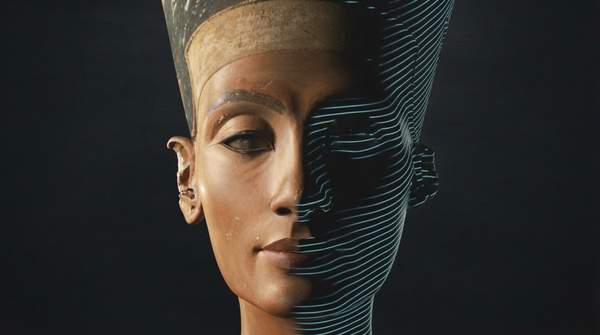
Three-dimensional capture is the foundation layer of digital heritage. High-precision digitization and digital twins—virtual counterparts of physical sites—allow a mural, temple, or artifact to exist as data even if the original degrades or disappears. Writing for the Arts Management and Technology Lab, Yao Pei describes how China's heritage sector uses technology-driven digitization to preserve legacy sites, pairing 3D capture with virtual reconstruction.
The strength of this approach is fidelity: a durable, measurable record that supports restoration decisions and future research. The strain is sustainability. A study on metaverse applications in cultural heritage, published in npj Heritage Science by Dipima Buragohain and colleagues, concludes that while challenges remain, digitalizing heritage can be made more sustainable and effective—preserving digital assets for future generations while minimizing environmental impact and maximizing cultural learning. That phrasing is telling: digital records are not free, and keeping them usable over decades is itself a preservation problem.
AI and Machine Learning: Intelligent Analysis and Reconstruction
Where 3D capture records what exists, machine learning interprets and reconstructs it. Pei's explainer for the Arts Management and Technology Lab offers the clearest framing I have seen: instead of programming explicit rules, researchers feed computers large sets of examples and let the systems learn patterns themselves. Shown enough cases, a model can learn what damage on a mural looks like, how to virtually restore faded colors, or how to piece together fragments of ancient texts.
The payoff is analytical reach—spotting patterns and changes across thousands of examples at a scale human experts cannot match. A framework study on AI, blockchain, VR, and digital twins in heritage conservation, hosted by PMC, reports that its validation confirmed AI-driven modeling directly boosts heritage conservation effectiveness through automation and precise reconstruction, maintaining the integrity and accuracy of digital assets.
But the same study is candid about the costs. Its case analysis highlights authenticity, cost, and sustainability as key challenges, and it flags that NFT-based authentication in particular encounters problems of security, cultural value recognition, and market volatility—raising concerns about long-term sustainability. Automated reconstruction also raises ethical questions about who decides what a "restored" heritage asset should look like.
Virtual and Augmented Reality: Immersive Engagement and Accessibility
VR and AR are the public-facing half of the equation. As Lorant Toth explains in an article for Confinity, VR lets users immerse themselves in ancient worlds as if they were there, while AR overlays digital information onto real environments—museum visitors can point a smartphone at an artifact and learn its history, origin, and significance. These experiences, he writes, foster a deeper connection to cultural roots.
What the research adds is a caution about over-crediting the immersion itself. The PMC framework study found that interactive functionality enhances user immersive experience and perception, but does not directly influence heritage conservation effectiveness. In other words, VR and AR are engagement tools, not preservation tools; their value to conservation is indirect, working through what audiences notice and care about.
The barriers here are practical: technical limitations, cost, accessibility, and the need for genuinely high-quality content to make the experiences meaningful rather than gimmicky. An overview of AI and heritage published by the Coespu project puts the forward-looking case plainly: continued advancement of AR, VR, and AI "promises to further transform the landscape of cultural heritage and tourism," enhancing immersive experiences and interactive learning—but challenges of digital equity, data privacy, and the preservation of intangible cultural heritage must be addressed so the benefits reach everyone.
Comparative Overview of Digital Heritage Technologies
The table below synthesizes the three technologies across their primary application, a representative use case, and their key challenge, drawing on the academic and institutional sources discussed above. Read it as a decision aid: match the technology to your goal first, then plan for the hurdle in the right-hand column.
| Technology | Primary Application | Example Use Case | Key Challenge |
|---|---|---|---|
| 3D Technologies (Scanning / Photogrammetry) | High-precision documentation and digital twins for preservation and virtual reconstruction | Digital twins of heritage sites enabling study and restoration of legacy sites, as in China's technology-driven digitization efforts | Sustainability of digital assets over time, including environmental impact of storage and maintenance |
| AI / Machine Learning | Advanced analysis, pattern recognition, and automated, precise reconstruction | Learning what mural damage looks like across thousands of examples to virtually restore faded colors or reassemble ancient text fragments | Data integration, interoperability, security, privacy, and ethical concerns around automated decision-making; cost and long-term sustainability |
| VR / AR | Public engagement, cultural education, and immersive experiences | AR museum apps where pointing a phone at an artifact reveals its history and significance; VR immersion in reconstructed ancient worlds | Technical limitations, high costs, accessibility gaps, and the need for high-quality content; boosts user experience but not conservation effectiveness directly |
One pattern worth noticing: the challenges cluster. Cost, sustainability, and questions of authenticity appear in every row, just in different forms—storage and maintenance for 3D data, governance and ethics for AI, hardware and content quality for VR/AR. These are systemic issues across the field, not quirks of individual tools.
The Road Ahead: Challenges and Ethical Considerations
The forward-looking literature converges on a shared agenda. The npj Heritage Science metaverse study emphasizes that digitalization can be sustainable and effective only if challenges are actively managed. The PMC framework study points to authenticity, cost, and sustainability as the recurring friction points, and the Heritage journal work on living ecosystems argues that authenticity should be treated "not as a fixed property of objects or technologies, but as an emergent quality sustained through transparent practices, ethical governance, and meaningful audience engagement."
Ethics extends beyond governance language. The Coespu overview highlights digital equity and data privacy as conditions for ensuring the benefits of digital cultural initiatives are accessible to all—and, more soberingly, notes that cultural destruction has long been used deliberately as a weapon of war, aimed at demoralizing communities and erasing historical narratives. Digital records are one response to that threat, which is part of why documentation and engagement deserve to be treated as complementary rather than competing priorities.
Navigating the Digital Future of Heritage Preservation
For culturally engaged readers and heritage organizations alike, the practical decision is this: to leverage these technologies effectively, tools must be selected strategically based on the specific goal—documentation and restoration on one hand, public engagement on the other—while proactively addressing ethical considerations, funding, and data management. A 3D digital twin serves the first goal; AI amplifies both; VR and AR serve the second. No single tool covers the full mission.
The measurable indicator of success is concrete: the creation of sustainable, accessible, and ethically managed digital heritage assets that foster both preservation and public engagement. That is the standard to hold any digitization project to—and the outcome worth watching for as these technologies mature.
Sources
- From Murals to Metadata: Digitizing Cultural Heritage in the Tech Age — Arts Management and Technology Lab
- Digitalizing cultural heritage through metaverse applications — Nature
- Reimagining cultural heritage conservation through VR, metaverse, and digital twins — PMC
- Technology for Preserving Cultural Heritage — Confinity
- COESPU