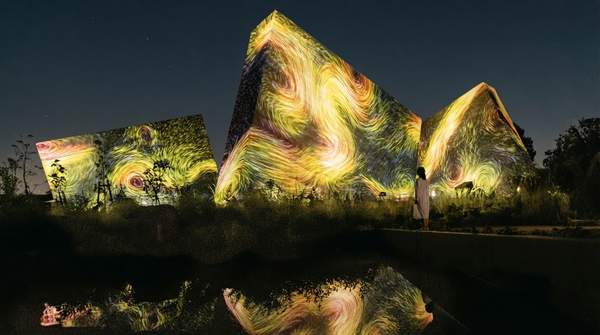
When a city commissions a digital mural or an interactive light installation, the question that follows is rarely “is it beautiful?” It is: “what did it actually do for this place?” Research on public art and urban development suggests the honest answer requires looking at four distinct dimensions at once—community engagement, cultural value, economic impact, and aesthetic integration—and, crucially, at the digital mechanisms that make each one work. This article lays out that framework and the technologies that power it, so planners, artists, and community advocates can evaluate a project on more than subjective appreciation alone.
Introduction: Digital Art as a Catalyst for Urban Revitalization
Public art has long been tied to the transformation of shared space. A study of public art’s influence on urban revitalization found it exerted a “multifaceted influence,” transforming cityscapes aesthetically and culturally while stimulating economic activity. When that art is digital and interactive, the transformation gains a new layer: the work can respond to its surroundings in real time rather than standing still. As the Arts Management and Technology Lab has observed, artists increasingly treat technology as a medium that converts traditional artworks into “innovative, immersive events,” generating new forms of creation, appreciation, and consumption in the process. That responsiveness is what makes digital installations a distinctive revitalization instrument rather than a novelty.