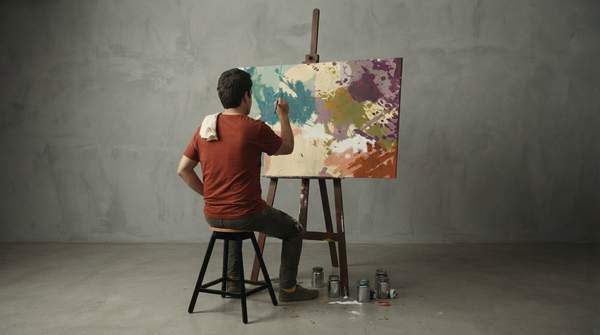
You do not need talent, training, or a studio to use art for your well-being. The evidence points to three distinct modes of engagement—actively creating, mindfully appreciating, and participating with others—each mapping to different goals, from stress reduction to self-understanding to belonging. The practical move is matching the mode to what you actually need right now.
Introduction: Art for Everyday Well-being
There is an important boundary to draw before anything else. Self-directed creative activities may support reflection and general well-being, but formal art therapy is provided by a credentialed art therapist, and persistent or severe distress deserves support from a qualified health professional, as the Rocky Mountain College of Art + Design emphasizes. This article sits firmly on the everyday side of that line: it is about small, accessible practices woven into a routine, not clinical treatment or professional artistic development.
That everyday side is surprisingly rich. Writing for Mayo Clinic Press, Dana Noble notes that the American Congress of Rehabilitation Medicine says making or even just seeing art can impact the brain—increasing serotonin levels, increasing blood flow to the part of the brain associated with pleasure, fostering new ways of thinking, and helping people imagine a more hopeful future. Those effects are not reserved for gallery-goers or trained painters.
The Three Modes of Artistic Engagement for Well-being
The framework below rests on a simple observation: how you engage with art shapes what you get from it. A philosophical analysis published in PMC's research archive argues that art appreciation helps people see others and the world from a different point of view, altering perspectives and revealing more about themselves—what moves them, or what makes them uncomfortable. That is the reflective payoff of appreciation. Salience Health, by contrast, describes the payoff of making: journaling to process emotions, creative problem-solving, and small artistic activities that provide moments of relaxation and inspiration. And the University of Arizona Health Sciences highlights a third, social dimension—group dance, music, and shared art-making that build belonging and reduce isolation.
Read together, these sources suggest a decision logic: if your goal is processing or release, create; if it is perspective and self-knowledge, appreciate; if it is connection, participate. Most people benefit from some mix of all three.
Active Creation: Expressing and Processing
Active creation is the hands-on mode, and its well-being value comes through self-expression and problem-solving. Salience Health describes journaling or keeping a sketchbook as a therapeutic practice that allows people to record their thoughts, emotions, and experiences, providing a sense of catharsis and self-reflection. The same piece emphasizes that integrating creativity into daily life—even through the simplest acts of self-expression—can foster personal growth.
The key insight is that the benefit does not depend on the product. A five-minute sketch or a paragraph of unpolished journaling works because the act of externalizing an internal state is itself the mechanism. This is also why creation suits stress: it occupies attention, channels emotion into a physical form, and produces something you made, which Salience Health frames as a reminder that you are inherently creative.
Mindful Appreciation: Observing and Reflecting
Appreciation is the quieter mode, and it is often overlooked in practical guides. The PMC analysis argues that empirical research helps explain the mechanisms behind art's socio-epistemic skills of self-understanding and other-understanding—skills many people associate with what art appreciation does: helping them see from a different point of view and understand more about themselves, including what moves them or makes them uncomfortable.
Physiologically, Noble reports that even just seeing art can affect the brain, including increased blood flow to pleasure-associated regions. Practiced mindfully—slowing down with a single painting, photograph, or piece of music and noticing your actual response—appreciation becomes a structured exercise in emotional appraisal rather than passive consumption. The evidence supports it as a route to calm and self-knowledge, not just aesthetic pleasure.
Social Participation: Connecting Through Art
The third mode corrects a common blind spot: treating well-being as purely individual. The University of Arizona Health Sciences puts it plainly—mental health is not just individual, it is social. Participating in group dance, music, or shared art-making builds belonging and reduces isolation, and creating together strengthens both personal and collective well-being.
Their summary of research adds a striking comparison: Tai Chi improves psychological well-being, and newer studies suggest dance can be as effective—or even more effective—than other forms of exercise for psychological and cognitive health. For people whose isolation is the problem rather than their stress response, a group creative activity may be the better entry point than solitary journaling.
Decision Framework: Matching Art Engagement to Your Well-being Goals
Use this table to move from a general interest in "doing more art" to a specific practice. Find the row whose well-being goal matches yours, then start with one of the example activities.
| Engagement Type | Well-being Goal | Example Activities |
|---|---|---|
| Active Creation | Process complex emotions, reduce stress, foster personal growth through self-expression and problem-solving | Journaling or keeping a sketchbook; small artistic projects requiring minimal skill or materials |
| Mindful Appreciation | Emotional appraisal, pleasure, and self-understanding—learning what moves you and what unsettles you | Slowly viewing a single artwork, photograph, or piece of music and noticing your response |
| Social Participation | Build belonging, reduce isolation, strengthen personal and collective well-being | Group dance, group music, or shared art-making sessions |
The reasoning behind the mapping: creation earns its stress-reduction and processing row from Salience Health's account of journaling and catharsis; appreciation earns its self-understanding row from the PMC analysis of perspective-shifting and emotional appraisal; and social participation earns its connection row from the University of Arizona's evidence on group creative activity and belonging.
Simple Starting Points for Your Routine
Low barrier is the point. The University of Arizona Health Sciences notes that you do not need a studio or special equipment to benefit. A workable starter set might look like this:
- Journaling or sketching — a few minutes of recording thoughts, emotions, and experiences, which Salience Health describes as providing catharsis and self-reflection.
- One mindful viewing — choose a single artwork or song and spend time with your genuine reaction to it, practicing the perspective-taking the PMC analysis describes.
- One shared creative act — a group dance class, community music session, or art-making gathering, the settings the University of Arizona links to reduced isolation.
These are examples, not an exhaustive catalog, and none requires prior skill. The aim is frequency over quality: a small practice repeated weekly does more for well-being than an ambitious project abandoned after one attempt.
Embrace Creativity for a Healthier You
Readers should commit to regularly integrating simple, low-barrier artistic activities into their daily or weekly routines based on their identified well-being goals—creating to process, appreciating to reflect, participating to connect. The measurable indicator is a noticeable increase in feelings of calm, self-awareness, or social connection after engaging in your chosen activities. If a practice produces none of those after several weeks, switch modes rather than quitting: the framework exists precisely so you can match the method to the need, and the boundary remains—persistent or severe distress calls for a qualified health professional, not a sketchbook alone.
Sources
- Brushing Away Stress: 21 Art Therapy Activities for Self-Expression and Healing - RMCAD
- The intersection of art and health: How art can help promote well-being - Mayo Clinic Press
- What Is Art Good For? The Socio-Epistemic Value of Art - PMC
- The Healing Power of Art and Creativity - Salience Health
- How creative arts support mental health in daily life — The University of Arizona Health Sciences