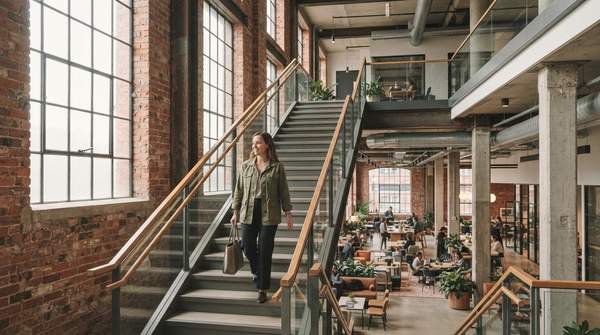
In cities around the world, a quiet architectural revolution is taking place. Instead of demolishing old structures to make way for the new, developers and architects are increasingly turning to adaptive reuse, a practice that repurposes existing buildings for entirely new functions. This approach transforms underutilized assets into vibrant spaces, blending a city's heritage with its modern needs. As a strategy, adaptive reuse offers a powerful path toward more sustainable and culturally rich urban environments, but it is a path filled with unique and complex challenges that demand careful consideration.
What is Adaptive Reuse?
Adaptive reuse is the process of taking an existing building and repurposing it for a new use, a practice that has become a leading architectural solution for flexibility and sustainability. This approach is distinct from both renovation, which typically involves updating a building for its current function, and historic preservation, which focuses on maintaining a structure's original state. According to one analysis, adaptive reuse is often viewed as a compromise between complete preservation and outright demolition, aiming to give an old building new utility while respecting its past.
This method allows architects to craft a narrative that connects a building's history with contemporary design. Successful examples are widespread, from New York’s High Line, which transformed an abandoned elevated railway into a public park, to a historic hospital and school converted into a modern multifamily housing development. By breathing new life into old structures, adaptive reuse revitalizes neglected buildings into functional spaces that contribute to a city's ongoing story.
Adaptive Reuse: Benefits vs. Challenges
While adaptive reuse presents a compelling alternative to new construction, it involves a trade-off between significant advantages and considerable obstacles. The decision to pursue such a project requires a clear understanding of this balance across environmental, economic, and cultural dimensions.
| Category | Benefits | Challenges |
|---|---|---|
| Environmental | Reduces carbon emissions, construction waste, and embodied carbon by avoiding demolition and new construction. | Older buildings may contain hidden hazardous materials, such as asbestos or lead paint, that require costly and specialized abatement. |
| Economic | Offers potential cost savings and shorter project timelines compared to new builds. It also combats urban sprawl and can stimulate local economies through revitalization. | Projects can face difficulties securing investment capital. Unexpected structural issues, zoning changes, and the cost of bringing a building up to modern code can significantly increase expenses. |
| Cultural & Social | Preserves cultural heritage, strengthens local identity, and creates unique, character-rich spaces that contribute to community revitalization. | Tensions can arise between preservation goals and the functional needs of a new use. Significant upgrades are often required to meet modern accessibility and safety standards. |
Environmental, Economic, and Cultural Gains
The environmental case for adaptive reuse is compelling. With the built environment responsible for approximately 42% of global carbon emissions, repurposing structures is a critical strategy for sustainable development, according to Autodesk. By avoiding demolition and new construction, these projects reduce waste, lower a building's embodied carbon, and preserve the energy already invested in the original structure. This approach also helps combat urban sprawl by giving builders the option to develop existing sites within a city's core rather than seeking new land on its periphery.
Economically, adaptive reuse can be faster and less expensive than demolition and rebuilding, as the primary building envelope already exists. This can provide a cost-effective solution to urban development challenges, stimulating local economies by transforming underused properties into valuable assets. For example, the rehabilitation of nine historic buildings in Cincinnati's Findlay Parkside neighborhood created 51 apartments and 16,000 square feet of retail space, demonstrating how these projects can expand housing options and support small businesses.
Perhaps most profoundly, adaptive reuse preserves a city's soul. By maintaining historic buildings, the practice protects cultural heritage and strengthens a community's sense of identity and continuity. These projects often result in distinctive, character-rich spaces that stand out from the uniformity of new construction, fostering a unique urban landscape that celebrates past craftsmanship while serving contemporary needs.
Navigating the Hurdles of Transformation
Despite its many benefits, adaptive reuse is not without significant obstacles. Projects often face a web of regulatory barriers, as existing zoning stipulations can limit a building’s potential new uses or require extensive changes that drive up costs and extend timelines. Furthermore, older buildings were frequently constructed before the implementation of modern standards, creating a host of technical and safety challenges.
Many historic structures do not meet today’s requirements for accessibility, safety, and energy efficiency, which means significant investment is needed to bring them up to code. Adding elevators or ramps to a building with narrow doorways or retrofitting modern electrical and plumbing systems can be major hurdles. Environmental surveys may also uncover hidden hazardous materials that require careful and costly remediation. These "unknowns" introduce a level of financial risk, and projects can face difficulties securing investment capital due to the potential for unforeseen expenses.
Finally, adaptive reuse can create cultural tensions between the goals of preservation and the demands of a new function. Striking the right balance is critical to ensuring that these projects contribute not only to environmental and economic goals but also to socially equitable and inclusive urban development.
Making Informed Decisions on Adaptive Reuse
Consider adaptive reuse as a viable strategy for urban development when the benefits of sustainability, economic revitalization, and cultural preservation outweigh the complexities of regulatory compliance, safety upgrades, and financial hurdles. The success of this approach is not guaranteed but depends on a careful evaluation of a building's potential against the practical realities of its transformation. The ultimate goal is to create spaces that are both functional for the present and respectful of the past.
A key measurable indicator of success is the transformation of derelict or underutilized buildings into vibrant, multifunctional spaces, marked by increased community engagement, new businesses, housing units, and the preservation of historical character. When an old factory becomes a bustling market, or a vacant warehouse is reborn as affordable housing, the value of adaptive reuse becomes tangible, demonstrating a city's commitment to building a sustainable and meaningful future upon the foundations of its history.
Sources
- A Complete Guide to Adaptive Reuse in 2023 — MBH Architects
- Tips from a Preservation Architect: Adaptive Reuse vs. Demolition & New Build — LAYER
- Key factors for revitalising heritage buildings through adaptive reuse — Buildings & Cities
- What is adaptive reuse? Repurposing buildings for a sustainable future — Autodesk
- What is adaptive reuse (and why is it important)? — University of the Built Environment
- Making the Case for Adaptive Reuse — Savingplaces
- Restoring Value: How Adaptive Reuse Benefits Communities | Insights — Little
- Dutpartnership