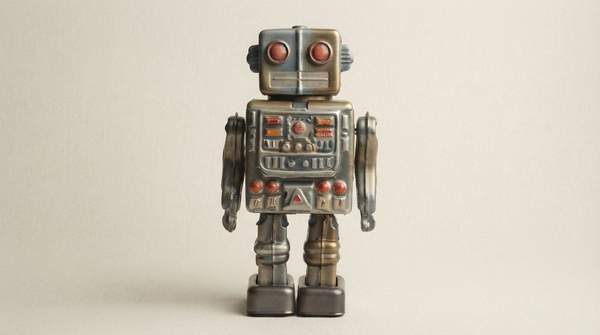
I typed a few words into a simple text box: “A journalist in a 1940s newsroom, surrounded by the ghosts of future headlines, cinematic lighting.” Seconds later, an image materialized on my screen. It was moody, evocative, and eerily close to the picture in my head. This simple act, now accessible to millions, sits at the heart of one of the most complex conversations of our time: the principles of ethical AI in art and design. Since the public release of DALL-E 2 on September 28, 2022, a tool that generates images from text, the debate around machine-made creativity has intensified, pulling artists, technologists, and ethicists into a shared, uncertain future. It’s a conversation that touches on the very essence of what it means to create, to own, and to be human in an increasingly automated world.
The sudden accessibility of these powerful tools has outpaced our collective ability to create rules and norms for their use. We find ourselves navigating a new frontier without a map, where every generated image raises fundamental questions. If an AI is trained on the entire visual history of humanity, who gets the credit for its output? If it learns our biases, how do we stop it from perpetuating them in new and insidious ways? And what do we owe the human artists whose life's work forms the digital clay from which these new creations are molded? Let's unpack this new reality, where ethical issues in AI art include pressing concerns regarding copyright, bias, and consent.
What Are the Principles of Ethical AI in Art and Design?
The principles of ethical AI in art and design are a set of guidelines and considerations aimed at ensuring that artificial intelligence tools are developed and used in a way that is fair, transparent, and respectful to human creators and society at large. Think of it like establishing a new social contract for creativity. For centuries, our understanding of art was tied to a human hand and a human mind. Now, we have a third party in the room—the algorithm—and we need to define its role and responsibilities. This isn't just about preventing harm; it's about shaping a future where technology augments human creativity rather than undermining it.
At its core, this framework is built on several key pillars that address the journey of an AI-generated image from its conception in a dataset to its final display. According to a lesson plan developed by Stanford University's CRAFT initiative, these real-world dilemmas require a focus on fair and transparent practices. The central principles include:
- Consent: This principle addresses whether the creators of the original images and texts used to train an AI model have given their permission for their work to be used in this way. Most large models are trained by scraping vast amounts of data from the internet, often including copyrighted material without the creator's knowledge or consent.
- Copyright and Ownership: This pillar grapples with the question of who owns AI-generated artwork. Is it the user who wrote the prompt, the company that developed the AI, or the original artists whose work informed the final product? The legal and ethical lines are still profoundly blurry.
- Bias and Fairness: AI models learn from the data they are given. If that data reflects existing societal biases, the AI will learn and reproduce them. This can lead to stereotypical or harmful representations of gender, race, and culture, reinforcing prejudice on a massive scale.
- Transparency: This principle calls for clarity in how AI models are trained and how they operate. It involves disclosing the data sources used for training, acknowledging the use of AI in the creation of a work, and being open about the limitations and capabilities of the technology.
Exploring the Ethical Implications of AI on Creativity and Ownership
What struck me most when I first began exploring this topic was the sheer complexity of the ownership question. It’s a tangled web of legal precedent and philosophical debate. When you prompt an AI like DALL-E 2 to create an image, you are initiating a creative act. But the tool you are using has its own history—a "memory" built from millions of other images it has analyzed. This dynamic fundamentally challenges our traditional notions of authorship.
According to research from the Center for Media Engagement, the terms and conditions for a platform like DALL-E 2 state that its developer, OpenAI, holds the copyright for the rendered images, while the user retains ownership of the prompts they entered. This creates a peculiar dynamic where the "idea" belongs to the human, but the "execution" belongs to the corporation. It’s a solution that satisfies a legal need but leaves the philosophical question of authorship wide open. One user described the process to researchers as "like working with a really willful concept artist," highlighting the collaborative, yet unpredictable, nature of the interaction. You guide it, but you don't fully control it.
The legal system is also playing catch-up. A key point of clarity came from a seemingly unrelated case years ago involving a selfie taken by a monkey. The courts ruled that non-humans cannot hold a copyright. As Ro Basty, a doctoral candidate studying AI at the University of Cincinnati, explained in a university publication, this precedent has been extended to artificial intelligence. According to a report from UC News, ChatGPT and other artificial intelligence programs cannot be copyright holders. This decision places the ownership question squarely back in the human domain, but it doesn't resolve the dispute between the user, the AI developer, and the countless artists whose work was used for training.
This is where the principle of consent becomes critical. Many artists have discovered their work, identifiable by their unique style or even remnants of their signatures, in the outputs of AI models. They never agreed to have their art used as training material, and they receive no credit or compensation. This has led to widespread anger and a sense of violation within the creative community. It begs the question: is it ethical for a system to learn how to replicate a style by analyzing an artist's entire portfolio without their permission? Professional organizations are beginning to respond. The Graphic Artist Guild, for example, has developed Generative AI Ethical Use Guidelines to help navigate this new terrain. Their stated goals are to protect creative integrity, promote equitable industry standards, and ensure the ethical use of these powerful new tools.
Addressing Bias and Fairness in AI-Generated Art and Design
Beyond ownership, a perhaps more insidious problem lies deep within the code of these AI systems: algorithmic bias. An AI model is a product of its education, and its primary textbook is the internet. As a result, it learns to associate concepts based on the patterns it observes in billions of images and text files. The problem is that this data is a reflection of our world, complete with its long-standing stereotypes and prejudices.
The Center for Media Engagement provides a stark example of this in action: "Ask Dall-E for a nurse, and it will produce women. Ask it for a lawyer, it will produce men." This happens because the model has analyzed countless images where nurses are predominantly depicted as female and lawyers as male. Without specific intervention, the AI doesn't just reflect this bias; it amplifies and codifies it, presenting stereotypes as neutral, objective fact. When these tools are used to create illustrations for articles, advertisements, or educational materials, they risk perpetuating harmful and outdated social norms on a global scale.
This issue extends beyond gender roles to encompass race, culture, and geography. If a model is primarily trained on data from Western countries, its understanding of concepts like "a beautiful home" or "a traditional wedding" will be inherently narrow and culturally specific. It may fail to represent the diversity of human experience accurately, or worse, it may generate caricatures and stereotypes of non-Western cultures. The global impact of AI on artists and cultures is a significant concern, as these tools have the power to either foster cross-cultural understanding or entrench a single, dominant worldview.
Addressing this bias is a monumental challenge. It requires a conscious and deliberate effort from developers to curate more diverse and representative training datasets. It also involves building safeguards into the models themselves to prevent them from generating harmful or stereotypical content. For users, it means developing a critical eye. We must learn to question the images these systems produce and recognize that they are not objective creations but are shaped by the data they were fed. The contextual information surrounding an AI image—knowing how it was made and what biases it might contain—has been shown to shape our moral and aesthetic judgments of the work. Transparency isn't just an ethical ideal; it's a practical necessity for responsible use.
Why the Principles of Ethical AI in Art and Design Matter
Companies may replace photographers, illustrators, and designers with cheaper, faster AI alternatives, posing an immediate threat to the livelihoods of creative professionals. This job displacement is one direct consequence, but the implications of AI in art and technology extend to the integrity of our information ecosystem and our shared understanding of reality.
The progression from static images to AI-generated video is underway, raising ethical concerns about credibility and accountability. The rise of "deepfakes"—hyper-realistic, fabricated videos—threatens to erode trust in what we see, enabling political propaganda, false evidence, or personal defamation created with text. Establishing ethical guidelines for AI art is the first step in building a framework to manage these dangerous capabilities, preparing for a future where AI can manipulate video and sound with perfect realism.
AI technology democratizes the creation of visually compelling images, allowing anyone to bring ideas to life and unlocking new forms of expression. However, this also forces a reconsideration of the value placed on skill, effort, and the human touch. When technical execution can be outsourced to a machine, creativity may be redefined, emphasizing curation, concept, and the unique human vision.
Engaging with ethical AI in art and design shapes our future by deciding whether efficiency trumps ethics or technology serves human values. Championing transparency, demanding fairness, and respecting creators' rights can guide this powerful technology toward an equitable, inspiring future, reflecting the world we choose to build.
Frequently Asked Questions
Can an AI own the copyright to art it creates?
No, an artificial intelligence program cannot be a copyright holder. Current legal precedent, established in cases prior to the rise of generative AI, dictates that copyright can only be granted to human authors. While a company that develops an AI may claim ownership of the output, the AI itself has no legal rights of authorship.
How is AI art trained and why is it controversial?
AI art models are trained by analyzing massive datasets containing billions of images and their corresponding text descriptions, scraped from the internet. The controversy arises because these datasets often include copyrighted artwork and personal photos used without the owner's permission or compensation. This practice has led to legal challenges and ethical debates about whether it constitutes fair use or theft.
What is algorithmic bias in AI art?
Algorithmic bias occurs when an AI model produces outputs that reflect the stereotypes and prejudices present in its training data. For example, if the AI is trained on data where most images of doctors are men, its own generated images of "doctors" will likely be predominantly male. This can reinforce harmful societal biases related to gender, race, and culture.
Are there rules for using AI art ethically?
While there are no universal laws yet, ethical guidelines are emerging from professional organizations and the creative community. The Graphic Artist Guild, for instance, has published guidelines that advocate for consent from original artists, transparency about the use of AI, and fair compensation. Best practices generally encourage users to be mindful of copyright, avoid generating harmful content, and credit the role of AI in their work.
The Bottom Line
Navigating AI-generated art requires ethical digital literacy, addressing core human challenges of copyright, consent, and bias that question our values around creativity and ownership. As these powerful tools integrate into our lives, critical and conscious consumers and creators must demand transparency and fairness.